
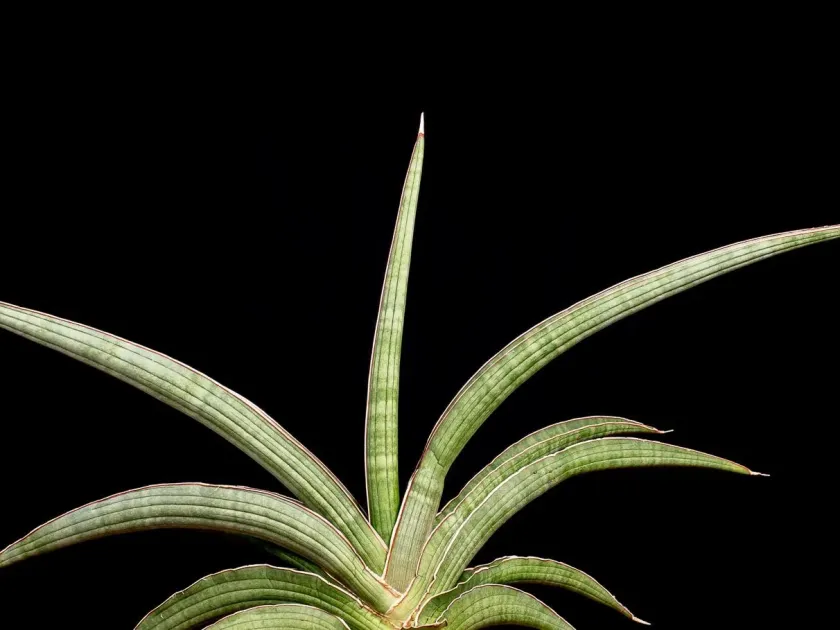
Sansevieria aethiopica hybrid
Sansevieria aeethiopica x Sansevieria cylindrica
Description
Growing requirements
The Sansevieria aethiopica hybrid belongs to the Asparagaceae family. This botanical hybrid is characterized by its compact habit and sturdy, architectural foliage, combining the genetic traits of S. aethiopica and the iconic cylindrical leaves of S. cylindrica.
Originating from the arid climates of Southern Africa, this plant is naturally adapted to high light conditions and periods of water scarcity. In an indoor environment, it thrives best in bright, indirect light, though it is remarkably tolerant of low-light conditions.
For cultivation, a well-draining succulent-specific substrate is strictly required. The soil mix should consist of components like pumice, coarse sand, and peat, ensuring that water drains quickly away from the root system to prevent anaerobic conditions.
The thermal requirements for this hybrid include a warm growing season between 20°C and 25°C. During the dormant winter period, the plant benefits from cooler temperatures around 14°C, which helps maintain its robust structure and encourages spring growth.
Watering frequency is determined by the environmental conditions and the rate of moisture loss in the substrate. It is standard practice to allow the soil to dry out almost completely between waterings to prevent common physiological disorders associated with overwatering.
Main diseases and pests
Pest issues primarily involve mealybugs and spider mites. Mealybugs often hide in the tight leaf axils, necessitating careful inspection and treatment with appropriate systemic insecticides or horticultural oils if an infestation is identified.
The primary horticultural threat is root rot, induced by waterlogging. Symptoms include dark, mushy spots at the base of the plant. Prevention involves strict adherence to drying cycles and ensuring the use of breathable, porous pots like terracotta.