
Sansevieria roxburghiana
Sansevieria roxburghiana Schult. & Schult. f.
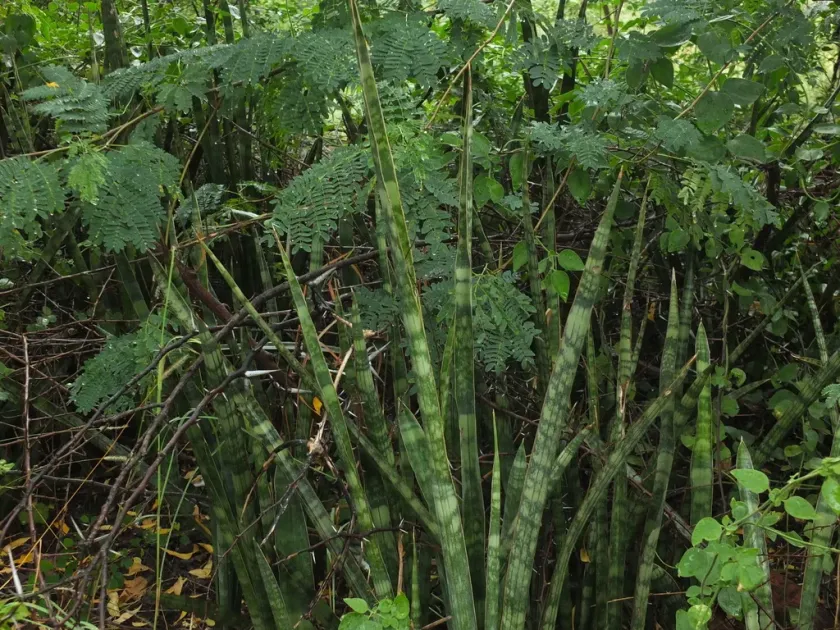
Description
Growing requirements
Sansevieria roxburghiana is a perennial herbaceous plant belonging to the Asparagaceae family. Native to the tropical regions of India, it is well-adapted to arid environments and rocky terrains, exhibiting high resilience to water scarcity.
Agricultural success with this crop depends on well-draining, sandy or loamy soils. The plant is highly sensitive to waterlogging, which often leads to root decay. It thrives in temperatures ranging from 20 to 30 degrees Celsius, requiring a balance of partial shade and filtered sunlight.
The plant is historically significant for its strong, durable leaves, which are rich in high-quality fibers. This makes it a viable candidate for sustainable fiber production, as it requires fewer inputs compared to many traditional industrial crops grown in similar climatic zones.
In terms of propagation, vegetative multiplication through rhizome division is the standard commercial practice. This method ensures consistency in plant quality and faster establishment of new plantations compared to seed propagation, which is inherently slow for this species.
Modern agrotechnical approaches emphasize maintaining proper plant density to ensure adequate airflow. Despite its slow growth rate, the plant is relatively low-maintenance, requiring minimal chemical intervention when grown in suitable soil conditions.
Main diseases and pests
The primary threats to Sansevieria roxburghiana are fungal pathogens triggered by high soil moisture levels. Root rot and stem base rot are the most common diseases that can significantly reduce the vitality of a plantation if drainage is not optimized.
Mealybugs are the most persistent insect pests, clustering in the leaf axils and stems. Their feeding weakens the plant and promotes the growth of sooty mold, which negatively impacts the overall physiological health of the crop.
Scale insects are another significant concern, as they firmly attach to the leaves and extract sap. Severe infestations lead to leaf yellowing and structural damage, which ultimately degrades the quality and tensile strength of the harvested fibers.
To manage these threats effectively, integrated pest management (IPM) strategies are recommended. This includes regular scouting for early signs of infestation and, if necessary, the application of targeted insecticides to preserve the fiber-producing capacity of the plants.
Furthermore, maintaining field hygiene by clearing debris and preventing the growth of dense, moisture-trapping weeds is crucial. Good ventilation across the field is the most effective preventative measure against both bacterial spot diseases and insect outbreaks.