
Sansevieria robusta
Sansevieria robusta N. E. Br.
Description
Growing requirements
Sansevieria robusta is a perennial succulent plant belonging to the Asparagaceae family. Originating from the arid regions of tropical Africa, it has evolved to thrive in harsh environments, making it a highly resilient and low-maintenance ornamental crop for indoor and greenhouse cultivation.
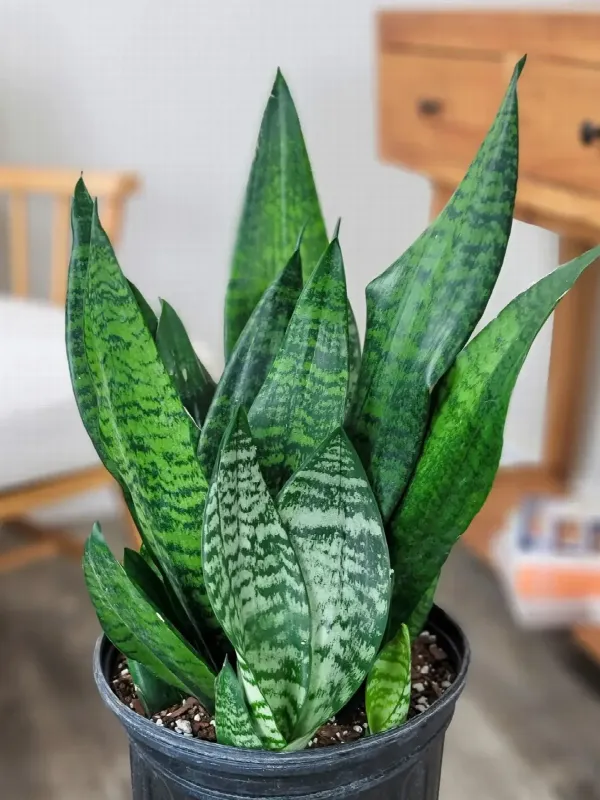
Botanically, the plant is characterized by its stiff, thick, sword-shaped leaves arranged in a compact rosette. These leaves have a deep green coloration with distinct transverse banding, which serves as a protective mechanism against intense solar radiation in its native habitat.
For optimal growth, the plant requires bright, indirect sunlight. While it is remarkably tolerant of low-light conditions, maintaining a consistent light exposure ensures that the plant retains its structural integrity and vibrant foliage patterns throughout the entire year.
Regarding soil requirements, Sansevieria robusta demands a well-draining substrate to prevent root rot. A mix consisting of potting soil amended with coarse sand, perlite, or pumice is ideal. Proper aeration of the root system is essential to prevent physiological disorders.
Watering protocols should be strictly monitored: the soil must be allowed to dry out completely between waterings. In cooler temperatures or winter months, watering should be drastically reduced to mimic the natural dormancy phase and prevent excessive moisture accumulation.
Main diseases and pests
Root rot is the most significant pathological threat to this species, typically caused by overwatering or poor drainage. Once root decay occurs, it quickly spreads to the leaf base, leading to rapid tissue death and the potential loss of the entire plant specimen.
Mealybugs are the most common insect pests encountered on this crop. These insects hide in the tight crevices between leaves, feeding on plant sap. Early detection and mechanical removal, or the use of systemic insecticides, are necessary to control these infestations effectively.
Spider mites may occasionally infest the foliage, particularly in environments with very low humidity. Their activity causes fine stippling on the leaf surface, which can lead to premature leaf drop and overall vigor decline if left untreated by regular washing or acaricide application.
Physical injuries to the leaf structure can become entry points for bacterial soft rot. Careful handling during propagation and repotting is crucial to avoid creating open wounds that facilitate the entry of soil-borne pathogens into the succulent tissues.
Maintaining proper hygiene by removing dead plant debris and ensuring adequate ventilation prevents the development of fungal spores around the root collar, thereby significantly reducing the necessity for chemical intervention in the management of the plant.