
Sansevieria parva
Sansevieria parva N. E. Br.
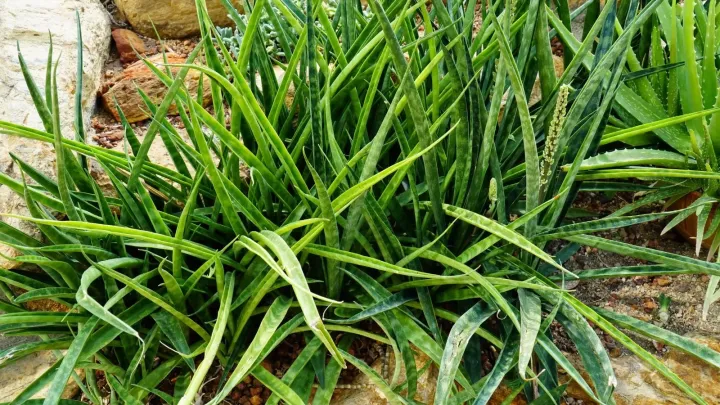
Description
Growing requirements
Sansevieria parva is a perennial succulent belonging to the Asparagaceae family, native to the tropical regions of Eastern Africa, particularly Kenya. This plant is widely recognized for its compact growth habit and its ability to thrive in restricted container environments as an ornamental crop.
The botanical structure consists of narrow, linear leaves arranged in dense basal rosettes. The foliage displays a striking color pattern, featuring dark green mottled designs or transverse bands on a lighter green background, which makes it a popular choice for interior landscaping and botanical collections.
In terms of climatic requirements, this plant prefers stable temperatures ranging from 20 to 25 degrees Celsius during the active growth phase. While it is tolerant of shade, it requires bright, indirect light to maintain its optimal color profile and structural integrity.
The soil for Sansevieria parva should be porous and well-draining, similar to those used for other arid-region succulents. A mixture containing sandy loam, perlite, and organic material is recommended to facilitate proper aeration of the root system and to prevent the risk of physiological disorders caused by waterlogging.
Irrigation management is the most critical aspect of agrotechnology for this species. Water should only be applied when the substrate is completely dry to the touch, ensuring that no liquid remains in the leaf axils, as this promotes rapid tissue necrosis and fungal development.
Main diseases and pests
The most common threats to Sansevieria parva are fungal pathogens that cause root and stem rot. These infections are almost exclusively linked to excessive watering practices or the use of heavy, non-porous soil media that retain moisture for too long, eventually killing the plant structure.
Pest management focuses primarily on controlling infestations of mealybugs and spider mites. These insects tend to cluster in protected crevices of the leaf rosettes, where they extract sap and leave behind wounds that serve as entry points for secondary bacterial infections and decay.
Effective control measures include the use of systematic insecticides and physical removal of visible insects using alcohol-soaked swabs. Keeping the foliage clean from dust also improves gas exchange and makes the plant less attractive to mites, which thrive in dry and stagnant air conditions.
Early detection of disease symptoms, such as leaf discoloration or soft spots at the base, is vital for saving the plant. In severe cases, the infected leaves must be surgically removed, and the plant should be re-potted into fresh, dry soil to prevent the progression of the pathogen.
Implementing regular monitoring routines is essential for long-term health. By ensuring proper ventilation and avoiding water accumulation in the crown, growers can significantly reduce the vulnerability of the crop to common pests and pathogens throughout the year.