
Sansevieria francisii
Sansevieria francisii Chahin.
Description
Growing requirements
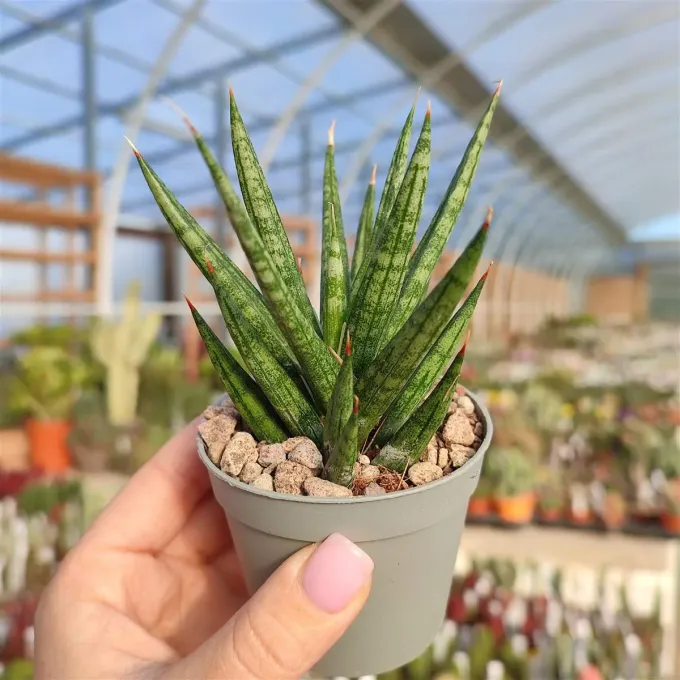
Sansevieria francisii is a succulent plant belonging to the Asparagaceae family. Native to Kenya, it is highly valued for its unique architectural growth habit and extreme resilience in arid conditions.
The plant is characterized by its stiff, succulent leaves that form a tight, spiral rosette. As the plant matures, it develops a woody stem, which distinguishes it from many other common Sansevieria species.
The species requires bright, indirect light to maintain its compact shape and vibrant leaf color. While it can survive in lower light conditions, consistent bright light promotes better growth and health of the rosettes.
Soil requirements are centered on rapid drainage. A specialized cactus and succulent mix is recommended, ensuring that water passes through the pot quickly to avoid any risk of root saturation.
Temperature management should prioritize consistency, ideally between 18°C and 25°C. The plant is drought-tolerant, meaning it is safer to keep it on the drier side rather than overwatering, especially during the dormant winter months.
Main diseases and pests
Root rot is the most common health issue for this plant, typically caused by excessive irrigation or poor drainage. Once the roots begin to decay, the plant loses its ability to uptake nutrients and water effectively.
Mealybugs are the most frequent pests, often clustering in the tight spaces between the succulent leaves. Monitoring these areas closely is essential for early detection and effective manual removal or insecticide application.
Scale insects can also attach to the foliage, appearing as small brown bumps. These pests consume plant sap and should be managed with horticultural oils or systematic treatments once identified.
Fungal infections can arise if water remains trapped in the center of the leaf rosette. Proper airflow is vital to ensure that any accidental moisture evaporates quickly, preventing the development of leaf spotting.
Maintaining a regular cleaning schedule by wiping the leaves with a soft, dry cloth helps in both keeping the plant clean and monitoring for early signs of infestations or environmental stress.