
Sansevieria dooneri
Sansevieria dooneri N. E. Br.
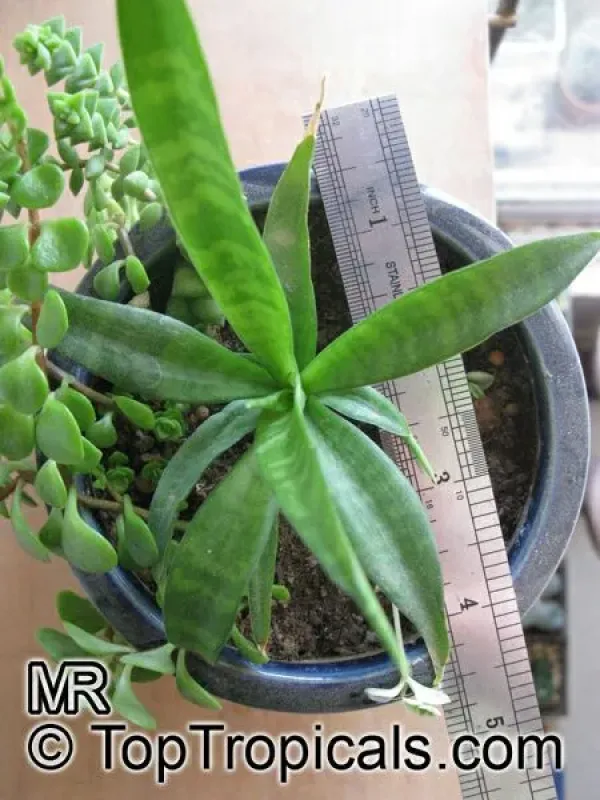
Description
Growing requirements
Sansevieria dooneri is a perennial herbaceous plant belonging to the Asparagaceae family. Native to tropical regions of Africa, this species has evolved in rocky terrains and shaded areas, developing high resilience to environmental stressors.
The botanical structure consists of a basal rosette of lanceolate, fleshy leaves. These leaves act as water storage organs, featuring a distinctive dark green color with subtle variegation, which is crucial for efficient light absorption in dense environments.
Climatic requirements are focused on maintaining stable temperatures, ideally between 18 and 25 degrees Celsius. The culture is highly adapted to low-moisture environments, making it efficient for various indoor and decorative agricultural settings.
Soil requirements involve the use of well-drained, sandy-loam substrates. The mixture must provide excellent aeration for the root system, preventing compaction and ensuring proper oxygen exchange during the peak growing season.
Agronomic practices include moderate irrigation with long intervals between watering to avoid moisture retention. Proper fertilization with nitrogen-balanced, low-concentration fertilizers supports steady growth without inducing rapid, weak cell development.
Main diseases and pests
The primary pests affecting Sansevieria dooneri include spider mites and mealybugs. These infestations typically flourish under dry, poorly ventilated conditions, leading to significant damage if not addressed promptly.
Root rot remains the most critical threat, caused by over-irrigation or poorly draining soil. Fungal pathogens invade the base of the leaf, often destroying the structural integrity of the plant within a short period.
Management strategies focus on strict irrigation control and the application of systemic fungicides to eliminate any soil-borne threats. Maintaining clean containers and sterile soil media is essential for prevention.
When pests are detected, targeted application of specific insecticides is required to eradicate the population. It is advisable to isolate infected plants to prevent the spread of mites to other parts of the crop collection.
Environmental management, including humidity control and proper spacing, serves as the primary non-chemical method to minimize the risk of pest and disease outbreak in professional cultivation.