
James's sage
Salvia xjamensis J. Crompton
Description
Growing requirements
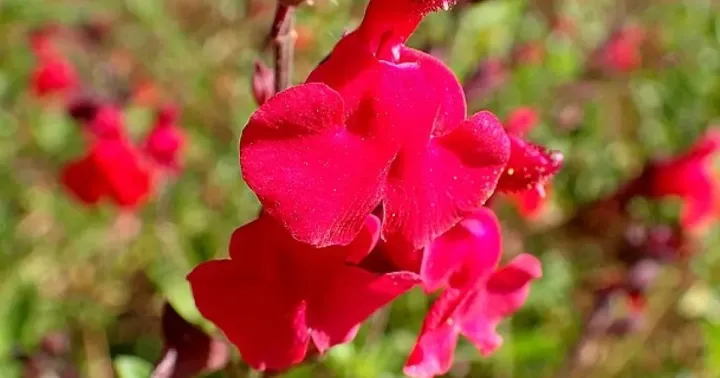
James's sage (Salvia x jamensis) is a hybrid plant belonging to the Lamiaceae family, resulting from the cross-breeding of Salvia microphylla and Salvia greggii. This semi-evergreen subshrub is highly valued for its continuous flowering season and adaptability to arid environments.
Originating from the northern regions of Mexico, this plant thrives in environments that mimic its natural habitat. It has adapted to thrive in harsh, sunny conditions, making it an excellent candidate for xeriscaping and sustainable garden designs.
The plant requires well-drained, sandy, or rocky soil to prevent root rot, which is the primary cause of failure in cultivation. It prefers neutral to slightly alkaline soil pH levels and does not tolerate waterlogged conditions, especially during the dormant winter months.
Temperature requirements are fairly moderate; while it can withstand some frost, it performs best in regions with warm, sunny summers. It requires full sunlight to encourage dense foliage growth and to maintain its vibrant, multi-colored flower spikes.
Agricultural maintenance involves regular pruning after the flowering season to encourage new growth and prevent the plant from becoming woody and sparse. Light application of organic mulch helps regulate soil temperature and retain essential moisture without causing saturation.
Main diseases and pests
Powdery mildew is a frequent concern for James's sage when humidity levels are high or air circulation is poor. Proper spacing during planting is essential to ensure adequate airflow and reduce the likelihood of fungal outbreaks.
Aphids are common pests that may target succulent young growth. They can cause stunted development and leaf curling. Early detection and the use of insecticidal soaps or neem oil are effective ways to manage aphid populations.
Spider mites can be particularly destructive during hot, dry spells, feeding on the undersides of leaves. Regular misting or the use of predatory mites can help keep populations in check while avoiding harsh chemical interventions.
Root rot, primarily caused by excessive moisture or soil compaction, is a critical threat. To prevent this, cultivators should ensure excellent drainage by incorporating grit or perlite into the planting hole to improve soil structure.
Whiteflies may sometimes infest plants, especially in greenhouses or sheltered spots. Implementing a management strategy that includes yellow sticky traps and cultural practices helps to keep the plants healthy throughout the growing season.