
Salvia regla
Salvia regla Cav.
Description
Growing requirements
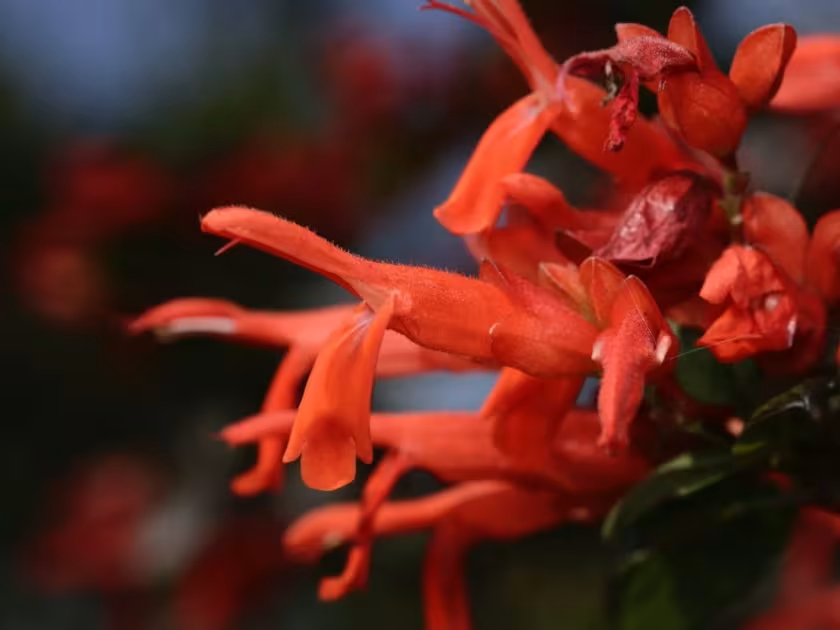
Salvia regla, commonly known as Mountain Sage, is a perennial subshrub belonging to the Lamiaceae family, native to the mountainous terrain of Mexico and Texas.
This plant is highly valued for its striking, trumpet-shaped orange-red flowers that bloom late in the season, adding vibrant color when many other plants fade.
It thrives in well-drained, sandy or loamy soils and requires full sun exposure to reach its maximum potential in height and flower production.
The plant is drought-tolerant once established, requiring deep but infrequent watering to ensure the root system stays healthy and does not develop rot.
Cultivation in regions with heavy frosts requires either winter protection or container gardening, as the plant is sensitive to prolonged freezing temperatures below its hardiness zone.
Main diseases and pests
The primary threats to Salvia regla involve moisture-related issues, as the root system is susceptible to decay if the soil remains waterlogged for extended periods.
Fungal pathogens such as powdery mildew may appear during humid seasons, especially if the air circulation around the shrub is restricted by surrounding vegetation.
Pests like aphids and spider mites can colonize the plant during hot, dry spells, potentially leading to yellowing of the leaves and stunted growth.
Effective management includes maintaining proper spacing during planting and implementing integrated pest management practices to control insect populations.
Regular sanitation, such as removing dead foliage and stems at the end of the season, significantly reduces the likelihood of overwintering pathogens.