
Meadow sage
Salvia pratensis L.
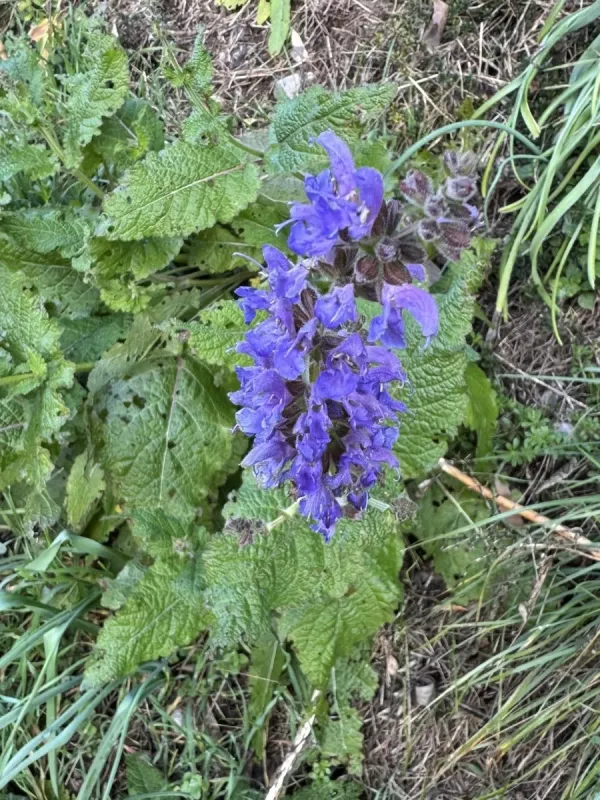
Description
Sowing dates
Sowing of meadow sage (Salvia pratensis) is typically performed either in late autumn or early spring. Autumn sowing allows the seeds to undergo natural stratification, leading to better and more uniform germination.
When spring sowing is planned, seeds must be stratified for 30 to 45 days at low temperatures. This practice is essential to overcome seed dormancy and ensure a higher percentage of successful field emergence.
The seeds should be sown at a shallow depth of approximately 0.5 to 1 centimeter. Because the seeds are tiny, the soil surface must be finely prepared and slightly firmed to prevent them from being buried too deep or blown away.
Row spacing is usually set between 45 and 60 centimeters. This provides enough space for mechanical weeding and ensures that each plant receives adequate sunlight and ventilation, reducing the risk of fungal infections.
Seedlings typically emerge within 2–3 weeks after sowing. It is vital to maintain constant soil moisture during the germination phase, as the young plants are highly sensitive to drought and surface crusting.
Growing requirements
Meadow sage belongs to the Lamiaceae family and is known for its hardiness. It thrives in open, sunny environments where it can receive direct sunlight throughout the day to maximize the production of essential oils.
The plant prefers well-drained, fertile, and slightly alkaline soils. It is particularly well-adapted to limestone-rich substrates, which help maintain the structural integrity and health of the plant.
Once established, the crop is highly drought-tolerant due to its deep taproot system. It can survive long dry spells, making it a reliable crop for regions with inconsistent summer rainfall.
While tolerant of various climates, meadow sage requires good air circulation. Excessive moisture combined with poor drainage in the root zone can lead to root rot, especially in heavy clay-based soils.
The optimal growth temperature ranges from 18 to 25 degrees Celsius. The crop is frost-hardy and survives winter conditions well in most temperate regions, provided the soil is not waterlogged.
Yield
The yield potential of meadow sage increases as the plantation matures. Peak production is usually achieved in the second and third years of growth, providing a steady supply of high-quality raw material.
On average, growers can expect an yield of 2 to 4 tons of dry biomass per hectare. Factors such as soil fertility, planting density, and local weather patterns significantly influence the final output.
The crop is utilized primarily in the pharmaceutical industry for its anti-inflammatory and antiseptic properties. Furthermore, it serves as a high-quality nectar source, making it valuable for local apiaries.
The concentration of essential oils is highly dependent on the harvest timing. Harvesting at the onset of peak flowering is critical to ensure the chemical composition meets industrial standards.
A well-managed meadow sage field can remain productive for 5 to 7 years. After this period, the plant density usually declines, and the field should be re-established to maintain economic profitability.
Main diseases and pests
Fungal diseases, particularly powdery mildew, pose the most significant threat to meadow sage crops. These infections are more prevalent in seasons with high humidity and lack of air circulation.
Various insects, such as weevils and spider mites, can damage the foliage and flowers. Integrated pest management strategies, including the use of pheromone traps, are recommended to monitor populations.
Weed competition is a major hurdle during the first year of growth. Young sage plants are slow-growing and can be easily choked by aggressive annual and perennial weeds if they are not controlled.
Effective crop rotation is essential. Meadow sage should not be planted after other members of the Lamiaceae family to minimize the buildup of soil-borne pathogens and specific pests in the area.
Chemical control should be used with caution, as the plant is frequently visited by pollinators. Applications of insecticides must be strictly timed to avoid harming beneficial insect populations.
Harvesting
Harvesting is performed during the peak flowering stage. This timing is crucial because the secondary metabolites and oils are most concentrated in the aerial parts of the plant during full bloom.
Mechanical harvesting involves cutting the plants at a height of 10–15 centimeters from the ground. This preserves the crown of the plant, allowing it to regenerate successfully for subsequent cuts.
Post-harvest management is critical; the harvested material must be moved to the drying facility immediately to prevent fermentation, which can degrade the quality of the essential oils.
Drying is typically conducted in controlled environments at temperatures not exceeding 40 degrees Celsius. Rapid drying helps lock in the plant's natural color and medicinal compounds.
Once dried to the appropriate moisture content, the crop is processed by removing stems and debris, then stored in cool, dark, and dry conditions to prevent oxidation of the active ingredients.