
Common sage
Salvia officinalis L. x Salvia ringens Sm.
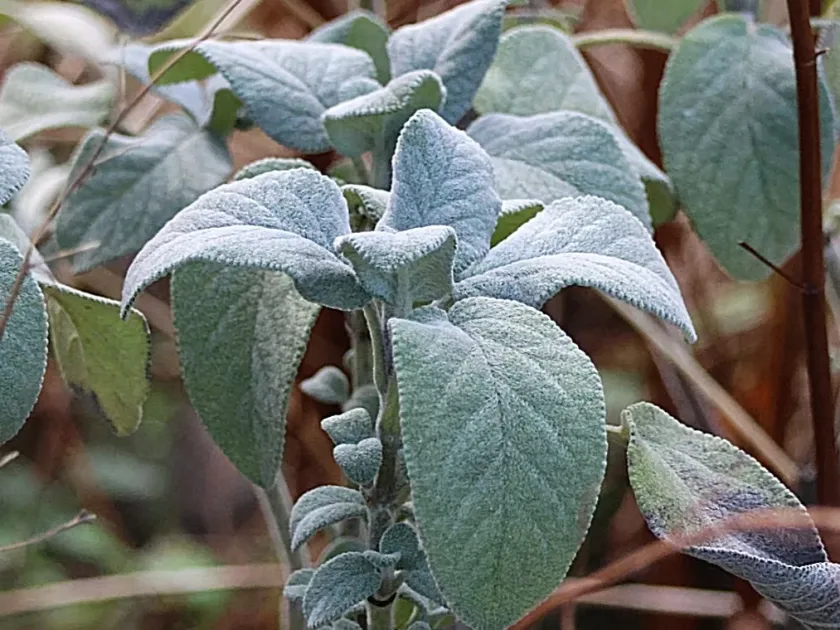
Description
Sowing dates
Common sage (Salvia officinalis) belongs to the Lamiaceae family. It is typically propagated via seeds sown in early spring or by vegetative cuttings to ensure genetic consistency.
When direct seeding, it is essential to place seeds at a shallow depth of approximately 1 to 2 centimeters in fine-textured, well-prepared soil beds.
Seedlings develop relatively slowly, so proper spacing between rows, usually 50–60 centimeters, is required to manage weed pressure effectively.
Propagation through semi-hardwood cuttings is a preferred method for commercial plantations as it ensures uniform plant development and faster establishment.
Proper timing of sowing is critical; the soil temperature should be consistently warm to facilitate uniform germination and prevent seedling rot.
Growing requirements
Sage thrives in full sun exposure. Choosing an open, well-ventilated site is essential for maximizing essential oil content and preventing foliage diseases.
The plant prefers well-drained, sandy loam or calcareous soils with a neutral to slightly alkaline pH level to ensure optimal root health.
While mature sage is drought-tolerant, consistent soil moisture is required during the first year of establishment and during peak growth phases.
Poor drainage is the primary enemy of sage; sites prone to waterlogging must be avoided to prevent root rot and overall plant decline.
Moderate fertilization with phosphorus and potassium is beneficial for plant vigor, but nitrogen levels should be managed to avoid excessive vegetative growth.
Yield
The economic yield of dried sage leaves typically ranges from 2 to 3 tons per hectare, depending on crop age and management intensity.
Yields tend to peak during the second and third years after planting, after which the plantation may start to show signs of reduced vigor.
To maintain high productivity, producers often implement annual pruning, which encourages the development of new, high-quality leaf-bearing branches.
Essential oil concentration is highly dependent on harvest timing, reaching its maximum levels during the early stages of the flowering cycle.
Strategic irrigation management can significantly increase the total biomass produced per hectare without compromising the quality of the essential oil.
Main diseases and pests
Powdery mildew is a significant threat to sage, especially in regions with high humidity and poor air circulation within the plant canopy.
Pests such as spider mites and aphids can infest sage plantings, requiring integrated pest management (IPM) strategies to maintain crop health.
Root rot caused by Phytophthora or Pythium species is common in overly damp soils, leading to sudden wilting and death of entire sections of the crop.
Regular monitoring and physical removal of infested plant parts are essential first steps in controlling pest outbreaks before they become widespread.
Crop rotation remains the best preventative measure against soil-borne pathogens; avoiding planting sage in the same soil for over five years is advised.
Harvesting
The primary harvest usually occurs during the onset of flowering, which is the period when the plant provides the highest concentration of active compounds.
Mechanical harvesters are often used to cut the stems, leaving a stubble of about 10–15 centimeters to allow for rapid plant recovery and regrowth.
Post-harvest handling requires rapid transport of the biomass to a shaded facility to prevent heat buildup and the loss of volatile aromatic compounds.
Drying is performed in controlled environments at temperatures below 40 °C to preserve the integrity of the leaves and their distinct grey-green color.
Final storage involves packaging the dried leaves in light-proof, airtight containers to ensure long-term stability and shelf life of the herb.