
Dwarf sage
Salvia nana Kunth
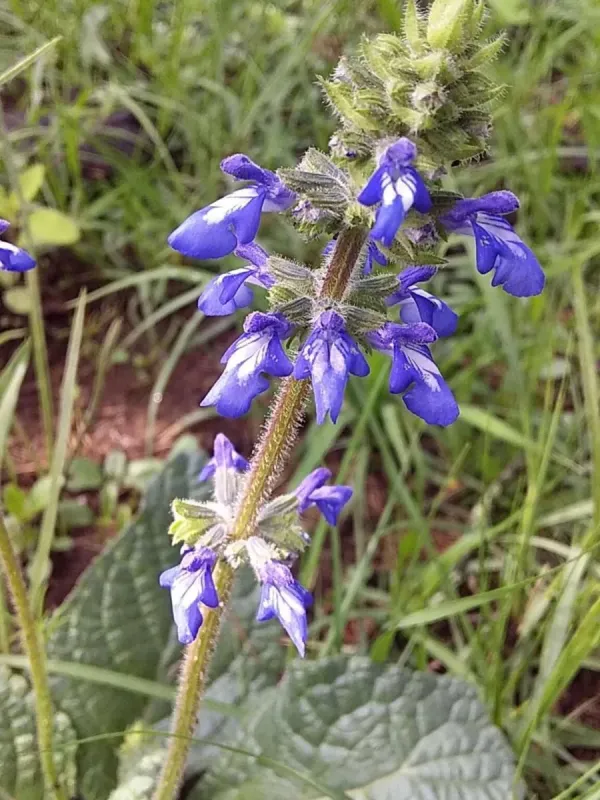
Description
Sowing dates
Dwarf sage (Salvia nana Kunth) belongs to the Lamiaceae family. It is a low-growing perennial herbaceous plant that requires specific environmental conditions for successful seed germination and vigorous vegetative growth.
In temperate climates, sowing is recommended during the spring period, when the soil temperature rises to 15–18 degrees Celsius. The optimal time is late April or early May, after the risk of night frosts has passed.
When using the seedling method, seeds should be sown indoors in late February. This allows the crop to gain the necessary vigor and root development before being transplanted to the field or the permanent growing site.
The planting depth for seeds should not exceed 0.5–1 centimeter. Small sage seeds require good contact with moist soil, so after sowing, the soil surface should be lightly pressed to improve capillary water movement.
The planting density for dwarf sage varies depending on the purpose of cultivation. Typically, a spacing of 30 by 40 centimeters is maintained, which provides sufficient nutritional space for the root system and foliage development.
Growing requirements
Native to the high-altitude regions of the Andes, this sage species has high requirements regarding light exposure. For normal development, the plant needs full sun exposure throughout the entire day.
The soil for dwarf sage must be light, well-drained, and have a neutral or slightly alkaline pH. Heavy clay soils with stagnant moisture are detrimental to the plant's root system, often leading to rot.
The plant possesses moderate drought tolerance; however, during the active growth period, it requires regular watering. Lack of moisture leads to stunted growth, while excess moisture reduces the essential oil quality in the leaves.
As for fertilizers, complex mineral formulas with low nitrogen content should be used during the flowering stage. Excessive nitrogen stimulates biomass growth at the expense of secondary metabolite accumulation.
The temperature range should be moderate. Dwarf sage is sensitive to sudden temperature changes, so in regions with harsh winters, it requires protection or should be cultivated as an annual crop.
Yield
The yield of essential oil raw material and medicinal mass directly depends on the quality of care and the agronomic background. With proper cultivation, one can achieve stable results in harvesting the aerial parts of the plant.
The first full harvest is typically gathered in the second year of the plant's life. Harvesting occurs during mass flowering when the concentration of essential oils in leaves and inflorescences reaches its peak.
To improve yield, regular weeding and loosening of the soil between rows are recommended. Removing weeds reduces competition for nutrients and water, which positively impacts the quality of the raw material.
After harvesting, the plant is capable of regrowing if timely watering and fertilization are provided. This allows for multiple cuts of foliage within a single growing season under favorable climatic conditions.
Total productivity per square meter is estimated as moderate. The primary value lies not in the volume of green mass, but in the content of secondary metabolites for which this sage species is cultivated.
Main diseases and pests
The main phytopathological risks are associated with excessive soil and air humidity. Root rots caused by fungi of the genera Pythium and Phytophthora are common and can quickly kill plants in the absence of drainage.
Powdery mildew poses a serious threat to the sage foliage. Upon detecting white fungal growth, it is necessary to treat the plants with fungicides or biological products based on Bacillus subtilis.
Among pests, aphids and spider mites are the most dangerous. These insects suck cell sap, which leads to leaf deformation and a significant decrease in the overall quality of medicinal and essential oil yields.
To protect against slugs and snails in the early stages, mechanical barriers and gravel mulching are used. The use of chemical pesticides is not recommended if the production is intended for pharmaceutical purposes.
Disease prevention consists of strictly following crop rotation and spatial isolation from other Lamiaceae species. Adhering to good agricultural practices is the best way to protect against biological threats.
Harvesting
Harvesting should be conducted in the morning hours after the dew has evaporated but before the heat of the day. This allows for the maximum preservation of aromatic and healing properties of the essential oils stored in the leaves.
The cut mass must be immediately transported to the drying area. In field conditions, cut stems should not be left under direct sunlight, as this leads to the rapid evaporation of active components.
Drying is carried out in shaded, well-ventilated rooms at a temperature no higher than 35–40 degrees Celsius. It is crucial to ensure free air circulation between layers of raw material to prevent the process of heating and rot.
The raw material is considered dry when the stems become brittle upon bending. Afterward, leaves and inflorescences are separated from coarse stems, sorted, and sent for further processing or storage in airtight containers.
Dried sage should be stored in a dry, dark place, protected from foreign odors and humidity. Properly dried plants retain their properties for 1–2 years if stored under appropriate conditions.