
Mojave sage
Salvia mohavensis Greene
Description
Growing requirements
Mojave sage (Salvia mohavensis) is a perennial shrub belonging to the Lamiaceae family. It is a native species to the Mojave Desert, thriving in arid environments that are typically inhospitable to traditional agricultural crops.
The plant requires extremely well-draining soil, such as rocky or sandy loam. It is highly intolerant of waterlogged conditions, which can lead to rapid decay of the taproot system and subsequent death of the specimen.
Regarding climate, it requires full sun exposure to maintain its compact growth habit and vibrant flowering cycles. It is perfectly adapted to intense heat and periods of prolonged drought, requiring very little supplemental irrigation once established.
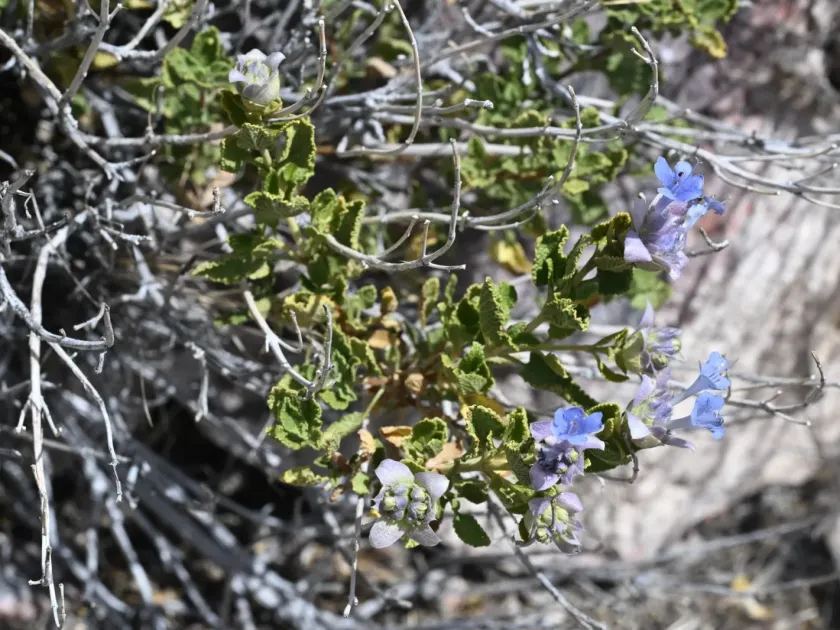
Botanically, Mojave sage is characterized by small, gray-green leaves covered in fine hairs that reflect sunlight and reduce water loss. The flowers are distinctively sky-blue, attracting native pollinators such as bees and hummingbirds during the spring season.
Its primary agricultural and horticultural utility lies in its use for water-wise landscaping (xeriscaping) and potential extraction of essential oils for specialized industrial or medicinal applications.
Main diseases and pests
The most significant threat to Mojave sage is root rot, primarily triggered by excessive irrigation or poor drainage in the soil composition.
Powdery mildew can become a concern if the plant is grown in areas with poor airflow or higher-than-average humidity levels, leading to leaf discoloration.
Pests such as aphids may occasionally infest new growth, especially during periods of unseasonable stress, requiring integrated pest management.
Spider mites are another potential pest, thriving in the dry conditions that this plant typically enjoys, which necessitates periodic monitoring of the foliage.
Herbivory by rodents can also impact wild or field-planted populations, particularly when competing vegetation is scarce during the summer months.