
Chia
Salvia hispanica L.
Description
Sowing dates
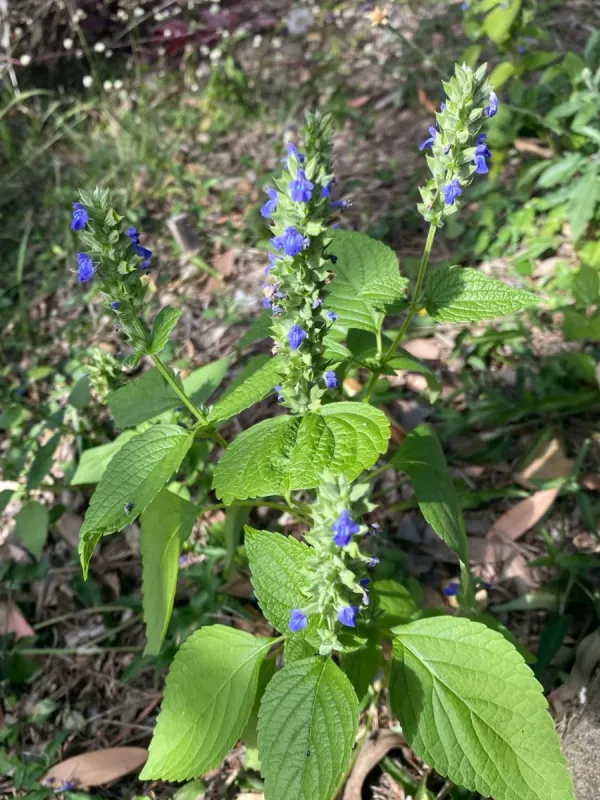
Chia (Salvia hispanica L.) is an annual herbaceous plant belonging to the Lamiaceae family. It is a short-day plant, which means its flowering and seed production are highly dependent on the photoperiod, a crucial factor for successful commercial cultivation.
The optimal planting time depends on regional climate conditions. Chia requires warm soil to germinate, typically between 15°C and 18°C. Sowing should only occur after the risk of frost has passed, as young seedlings are extremely sensitive to low temperatures.
Seeds should be sown at a shallow depth of 0.5 to 1 cm. Because chia seeds are tiny and require light and consistent moisture for germination, precise seed placement is essential for achieving a uniform stand.
Standard agronomic practice involves row planting with spacing between 30 and 50 cm. This allows for adequate root development and simplifies the mechanical or manual removal of weeds, which is necessary during the early stages of plant establishment.
Maintaining the correct plant density is vital. Overcrowding can lead to stunted growth and poor branching, while too sparse a stand may encourage excessive weed pressure and reduce overall grain yield per hectare.
Growing requirements
Native to the mountainous regions of Central and Southern Mexico and Guatemala, chia thrives in subtropical and temperate climates. It requires significant solar radiation to grow vigorously and reach its full reproductive potential.
Chia prefers well-drained, fertile, loamy to sandy-loam soils with a neutral pH. It is particularly intolerant of waterlogged or heavy clay soils, which promote root rot and can destroy the crop in a short period.
While the plant exhibits moderate drought tolerance, adequate moisture is critical during the vegetative growth phase and the transition into flowering. Supplemental irrigation may be necessary in arid regions to maximize yield.
The plant is responsive to balanced soil nutrition, particularly organic amendments. Adequate levels of phosphorus and potassium are essential for supporting floral development and the accumulation of high-quality fatty acids in the seeds.
Weed control is the most demanding aspect of chia management. Due to its slow initial growth rate, the crop is easily outcompeted by weeds in the first several weeks, necessitating early cultivation or mulching.
Yield
Chia yields in commercial settings generally range from 0.5 to 1.5 tons per hectare. Variations in yield are usually attributed to the specific cultivar, soil fertility, and the length of the growing season before the first autumn frosts.
Genetic potential and day-length sensitivity are key determinants of productivity. Growers must select varieties that are well-adapted to the local latitude to ensure the plant completes its life cycle before adverse weather conditions set in.
High-yield management includes intensive monitoring of soil moisture and nutrient status. In optimized environments, plants show better branching, leading to a greater number of racemes and, consequently, a higher seed count per plant.
Timely harvest is essential to preserve the yield. As the seeds are held in small, thin-walled capsules that shatter easily when dry, delays in harvesting can lead to significant field losses due to seed shedding.
Post-harvest conditioning includes thorough drying of the seeds to 8–10% moisture content. Proper drying is the most effective way to prevent mold development and ensure the long-term quality of the harvest.
Main diseases and pests
Chia is generally considered a low-input crop with few major pests, but it is susceptible to various fungal diseases under conditions of high humidity, poor soil drainage, or stagnant air.
Insect pests can occasionally affect the crop, particularly during the seedling phase. Integrated Pest Management (IPM) is recommended to control populations while maintaining the ecological integrity of the field.
- Root rot (often caused by overwatering).
- Powdery mildew (tends to appear in crowded, humid plantings).
- Aphids (infest soft plant tissues).
- Leaf-feeding caterpillars.
- Competitive broadleaf weeds and grasses.
Crop rotation is a fundamental protective measure. It is advisable to avoid planting chia in fields previously occupied by other members of the Lamiaceae family to break the life cycles of soil-borne pathogens.
Given the growing demand for organic chia, farmers often prioritize physical weed control and the use of beneficial insect populations to manage pests instead of relying on synthetic pesticides.
Harvesting
The growing season for chia typically lasts between 100 and 150 days. Harvesting begins when the leaves have yellowed and fallen off, and the seed heads have turned brown and dry.
Mechanical harvesting is common on large farms using modified combines. Careful attention must be paid to the cylinder speed and concave settings to avoid crushing the delicate seeds during the threshing process.
If the crop does not ripen uniformly, farmers may use a swathing technique, cutting the crop and leaving it in windrows for several days to allow for final moisture loss and maturity equalization.
Harvesting should ideally take place on clear, dry days. Moisture on the seeds at the time of harvest significantly increases the risk of heating and spoilage in storage containers.
After cleaning and grading, the seeds should be stored in a cool, dark, and dry environment. Chia seeds are rich in omega-3 fatty acids, which are prone to oxidation if exposed to heat, light, or air for extended periods.