
Guaranitica sage
Salvia guaranitica x Salvia orbignaei
Description
Growing requirements
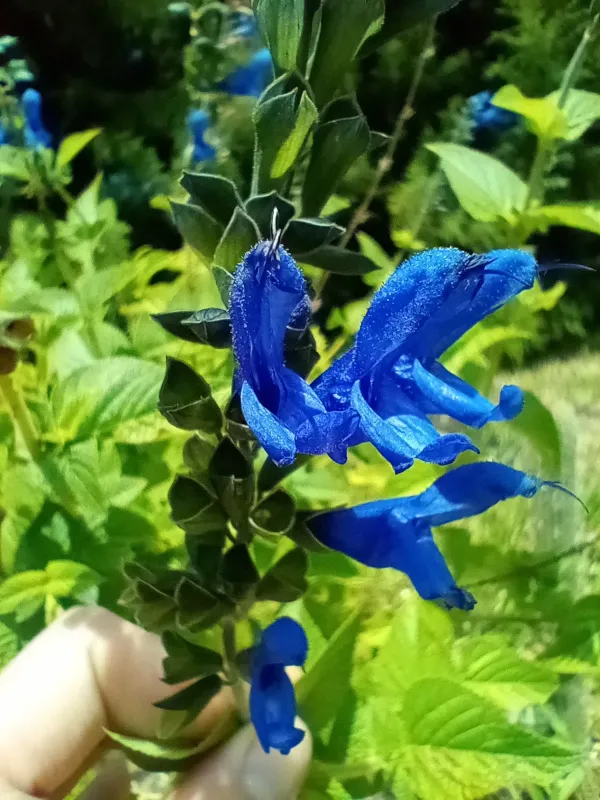
Guaranitica sage (Salvia guaranitica x Salvia orbignaei) belongs to the Lamiaceae family. This perennial species is highly valued in botanical gardens and specialized floriculture for its striking violet-blue flowers.
Native to South America, specifically Argentina, Brazil, and Paraguay, this plant thrives in warm and humid environments. It serves as a significant nectar source and is widely used for ecological stabilization in garden borders.
Cultivation success relies on well-drained, humus-rich soil. While the plant can adapt to various soil types, it performs best in slightly acidic or neutral conditions with sufficient organic matter content.
The plant requires a sunny location to maximize its physiological potential. In regions with extremely hot summers, partial shade is beneficial to prevent leaf burn and maintain soil moisture levels.
Agrotechnical maintenance includes winter mulching to protect the rhizomes from freezing temperatures. It is also important to prune the plant after the first frost to encourage healthy regrowth in the following spring season.
Main diseases and pests
Whiteflies are among the most common pests affecting Guaranitica sage, particularly in greenhouse conditions or warm climates. They weaken the plant by feeding on the sap, which often leads to secondary fungal infections.
Root rot, caused by Phytophthora species, is a significant threat when drainage is inadequate. Managing the water regime is essential to prevent the accumulation of moisture around the root crown.
Spider mites frequently attack the leaves during dry periods, causing chlorosis and premature leaf drop. Regular misting or the application of acaricides can effectively manage these populations.
Powdery mildew appears as a white dust-like coating on foliage when humidity levels fluctuate or airflow is restricted. Proper spacing between plants is the primary preventive measure to ensure good ventilation.
Slugs and snails can cause mechanical damage to young stems during the early spring. Implementing physical barriers or organic baits around the base of the plant is recommended for effective pest management.