
Darcy's Sage
Salvia darcyi J. Compton
Description
Growing requirements
Darcy's Sage (Salvia darcyi) is a herbaceous perennial belonging to the Lamiaceae family. Originally discovered in the mountain ranges of Mexico, it has become a popular ornamental species in many regions worldwide due to its striking aesthetic appeal.
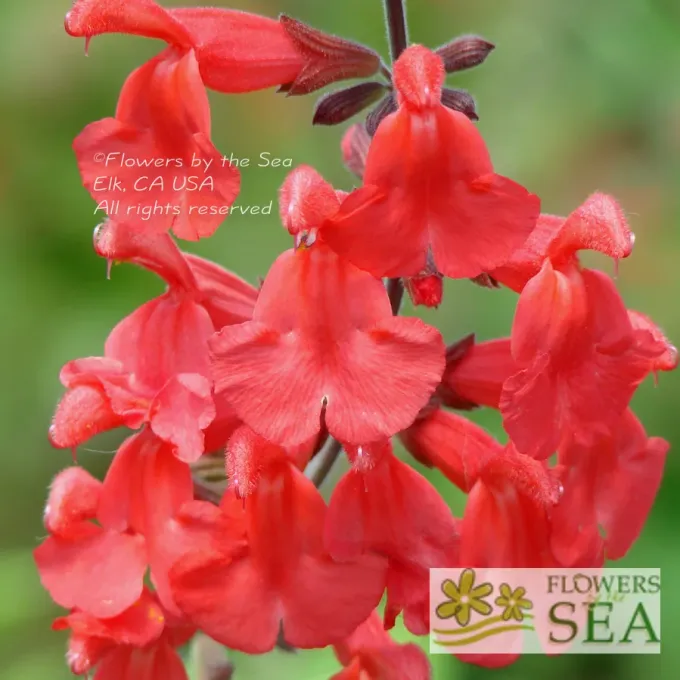
The plant features lush, heart-shaped foliage and develops tall, raceme-like flower spikes. The blossoms are characterized by a vibrant red color, which is highly efficient at attracting pollinators like bees and hummingbirds during the peak summer months.
Cultivation requires well-draining soil with good organic content. It thrives in locations that receive full sunlight for the majority of the day, although it can tolerate light shade in regions with extremely intense summer heat.
Regarding climatic conditions, Salvia darcyi prefers moderate temperatures and is sensitive to heavy frost. Proper irrigation is essential; while established plants show moderate drought tolerance, consistent moisture is needed to maintain vigorous growth.
In terms of practical use, the plant is valued for its hardiness in appropriate zones and its long-lasting flowers. It is widely used in xeriscaping and as a standout component in perennial garden beds and border plantations.
Main diseases and pests
Root rot is the most common physiological disorder, usually resulting from poor soil drainage or excessive irrigation during cool weather periods.
Common pests include spider mites and aphids, particularly during dry spells. Maintaining good plant spacing to ensure air circulation is the primary cultural practice to mitigate these infestations.