
Cleveland sage
Salvia clevelandii (A. Gray) Greene
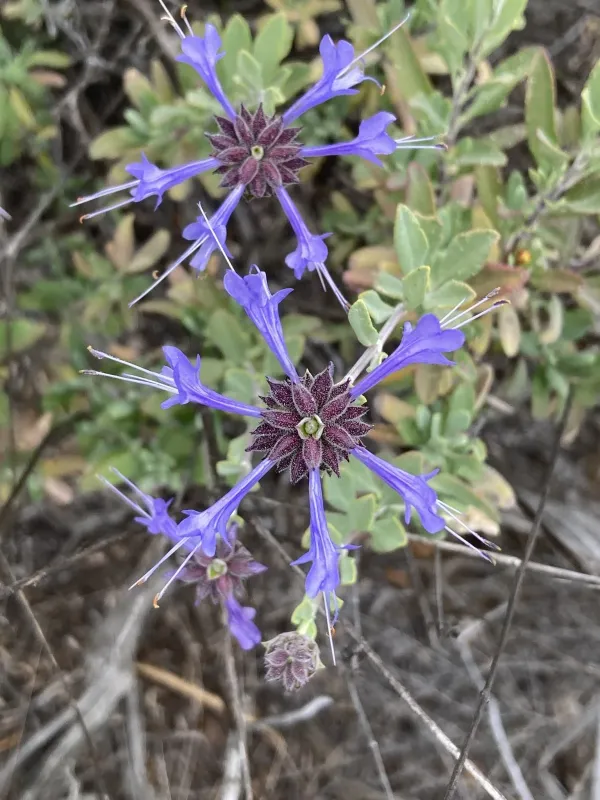
Description
Sowing dates
Propagation is typically achieved through seeds or stem cuttings. Seeds are sown in a light, sterile medium and left on the surface, as they require light to germinate effectively.
Spring is the preferred time for sowing, ensuring consistent moderate temperatures. Seedlings require careful monitoring of soil moisture, as they are susceptible to damping-off if conditions are too humid.
Cuttings are often preferred for agricultural purposes as they ensure clonal uniformity. Semi-hardwood cuttings taken in late spring show the highest success rates for root development.
Young plants should undergo an acclimatization phase before being transplanted into the open field to help them adjust to outdoor conditions and variable sunlight intensities.
Proper spacing is crucial for the health of mature specimens; providing at least one meter between plants ensures adequate airflow and reduces the risk of fungal outbreaks in the dense foliage.
Growing requirements
Cleveland sage (Salvia clevelandii) is an evergreen, aromatic subshrub belonging to the Lamiaceae family. It is native to the coastal sage scrub habitats of Southern California and northern Baja California.
The plant thrives in full sun, requiring exposure to direct light for the majority of the day to maintain its compact form and optimize the production of its characteristic fragrant essential oils.
Ideal soil conditions are well-draining, rocky, or sandy substrates with a neutral to slightly alkaline pH. It is highly intolerant of heavy, clay-rich soils that retain excess moisture, which can easily cause root decay.
As a drought-tolerant species, it is perfectly adapted to climates with dry summers and mild, moist winters. Regular irrigation should be avoided once the plant is established, except during extreme drought conditions.
While hardy, the plant may suffer damage in temperatures below -7 degrees Celsius. In cooler regions, it is best cultivated in containers or provided with protective mulch during the winter months.
Main diseases and pests
The most significant threat to a Cleveland sage crop is root rot, primarily caused by Phytophthora or other water-borne pathogens favored by poorly drained soils and excessive irrigation.
Pests such as aphids and spider mites can occasionally affect the plant, particularly during dry seasons. These insects target the tender new growth, which can lead to reduced plant vigor.
Powdery mildew may occur if the plants are situated in areas with poor air circulation or high ambient humidity. Cultural practices, such as judicious pruning, are essential to manage these risks.
Integrated pest management, including the encouragement of beneficial insects, is recommended over the use of harsh chemical pesticides to maintain the purity of the aromatic compounds.
Monitoring the plant for signs of stress, such as yellowing leaves or wilting, allows for early intervention, ensuring that the health of the entire plantation is maintained throughout the season.
Harvesting
Harvesting is ideally timed to coincide with the peak flowering phase, which ensures the maximum concentration of aromatic compounds within the inflorescences and leaves.
The harvesting process involves cutting the top 15 to 20 centimeters of the flowering stems. Care should be taken not to cut into the old, woody parts of the plant to facilitate healthy regrowth.
Post-harvest handling requires immediate drying in a shaded, well-ventilated area. Drying at low temperatures helps preserve the delicate essential oils that are highly prized in the fragrance industry.
Cleveland sage is widely utilized for its intense, pleasant fragrance in the production of essential oils, aromatherapy products, and various artisanal crafts like wreaths and potpourris.
Storing the finished product requires airtight containers in a cool, dark environment to prevent the degradation of volatile oils and ensure the shelf life of the botanical material.