
Hybrid sage
Salvia chamaedryoides x Salvia lycioides
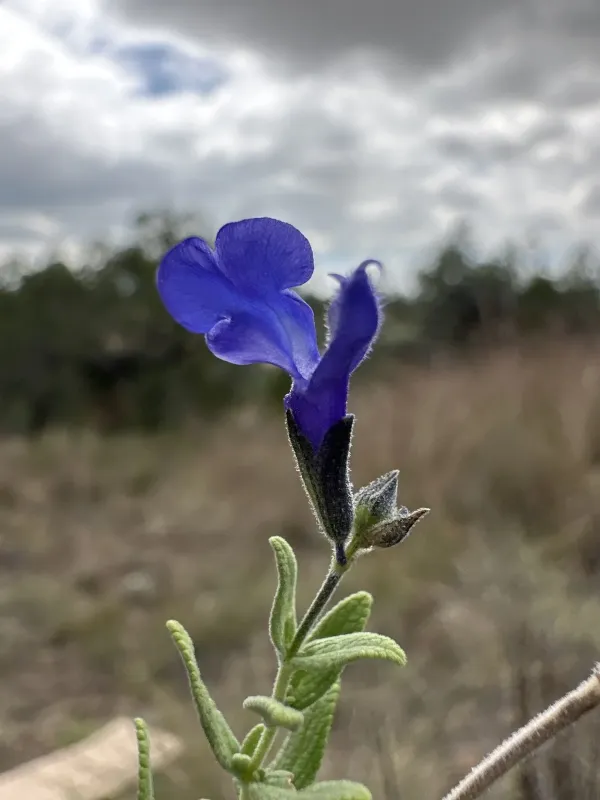
Description
Growing requirements
Hybrid sage (Salvia chamaedryoides x S. lycioides) is a perennial subshrub belonging to the Lamiaceae family. This hybrid is recognized for its unique combination of aesthetic appeal and high drought tolerance, inherited from its Mexican parent species.
The plant features small, grayish-green leaves with a fine, woolly texture that serves as a protective mechanism against extreme solar radiation and desiccation. Its growth habit is naturally dense and compact, making it suitable for low-maintenance landscaping.
Agronomic success with this crop requires full sun exposure and extremely well-draining soil. It thrives in gravelly or sandy substrates, while heavy, water-retentive soils often lead to fatal root rot issues during the dormant season.
The cultivation scope for this species is primarily focused on xeriscaping, ornamental gardens, and areas where water conservation is a priority. It is highly valued for its intense blue flowering period, which attracts pollinators to the agricultural environment.
Management practices involve minimal irrigation after the plant is established. Annual pruning is essential to maintain the structural integrity of the shrub and to stimulate vigorous growth for the next season.
Main diseases and pests
The primary threats to hybrid sage involve fungal pathogens stimulated by excessive humidity. Poor air circulation and waterlogged soil are the leading causes of root decay and foliage diseases, including powdery mildew.
Pests such as aphids and spider mites may become an issue during dry, hot spells if the plant’s moisture intake is severely restricted. These pests primarily target the soft, growing tips, causing stunted development.
Prevention is the most effective strategy for this crop. Ensuring the planting site is elevated and the soil amendment includes a significant portion of inorganic grit will drastically reduce disease pressure.
In case of infestation, mechanical removal or biological soap sprays are recommended over heavy chemical applications. Maintaining plant vigor through proper site selection is the best natural defense against potential pests.
Monitoring the plant during transition periods, such as spring to summer, is crucial to detect any signs of stress. Swift removal of infected foliage helps maintain the health of the entire collection.