
Hybrid Sage
Salvia chamaedryoides Cav. x Salvia greggii A. Gray
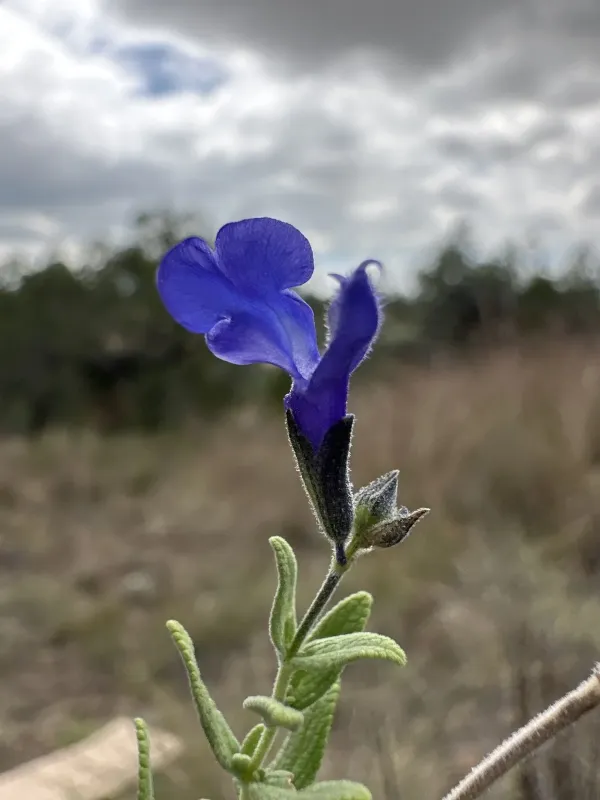
Description
Growing requirements
Hybrid Sage, a cross between Salvia chamaedryoides and Salvia greggii, is a perennial subshrub belonging to the Lamiaceae family. This hybrid combines the distinct foliage traits of its parents with excellent floral performance.
The plant originates from the arid regions of Mexico and the Southwestern United States. Its evolution in these environments has resulted in high tolerance to drought and a preference for intense solar radiation, making it an ideal choice for xeriscaping.
Regarding soil requirements, Hybrid Sage thrives in well-drained, sandy, or rocky soil types. The pH should be neutral to slightly alkaline. It is critical to ensure proper soil aeration, as root health is highly sensitive to waterlogging and compaction.
The climate requirements include a warm growing season and protection from extreme cold. While it can survive mild frosts, it performs best in regions where it is not subjected to prolonged freezing temperatures or excessive winter moisture.
Cultivation practices involve minimal irrigation once established and regular pruning to maintain a dense, bushy form. This plant is widely utilized in ornamental landscaping and provides significant value as a pollinator-friendly species for apiaries.
Main diseases and pests
The primary threats to Hybrid Sage are fungal diseases, most notably powdery mildew, which occurs in high-humidity environments. Improving air circulation around the plants is the most effective cultural method to prevent such outbreaks.
Root rot represents a significant physiological danger caused by poor drainage. If the root system remains saturated for an extended period, the plant becomes susceptible to opportunistic pathogens that quickly kill the crown.
Insect pests such as spider mites and whiteflies may attack the plant, especially during periods of extreme heat. These pests thrive in dry environments and can cause severe damage if left unmonitored during the peak summer months.
Monitoring the undersides of leaves is recommended as part of routine maintenance. Identifying infestations early allows for non-chemical interventions, such as washing the plants with water or applying horticultural soaps.
Effective pest and disease management requires a combination of proper site selection, appropriate irrigation timing, and proactive thinning of the foliage. These practices ensure the longevity and health of the Hybrid Sage population.