
Buchanan's sage
Salvia buchananii Hedge
Description
Growing requirements
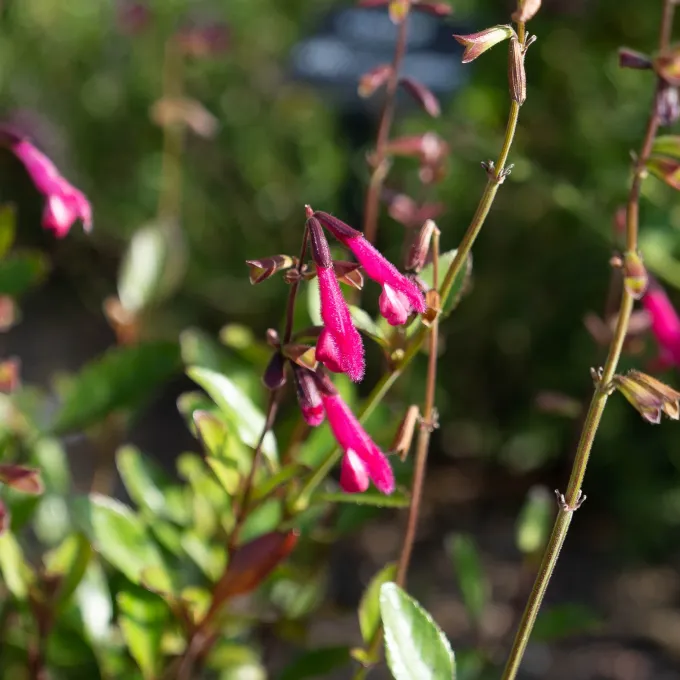
Buchanan's sage (Salvia buchananii) is a perennial ornamental plant belonging to the Lamiaceae family, native to the high-altitude regions of Mexico. It is highly valued for its striking, velvety magenta flowers and glossy foliage, making it a distinctive addition to decorative landscapes.
The plant thrives in warm, temperate climates and is highly sensitive to frost. In regions where temperatures drop below 5°C, it is typically grown as a container plant, allowing it to be moved indoors during winter months to protect the root system from freezing.
Soil requirements for Buchanan's sage center on excellent drainage and moderate fertility. It prefers a neutral or slightly acidic soil pH. Adding organic compost or perlite to the planting medium can improve aeration and prevent the root rot common in waterlogged soils.
Sun exposure is critical for this species; it prefers full sun or light shade during the hottest parts of the day. Consistent, moderate moisture is required, but it is essential to allow the top inch of soil to dry out between watering intervals to maintain plant vigor.
Maintenance involves pruning the tips of the branches during the active growing season to encourage bushier growth and more abundant flowering. This also helps in shaping the plant and preventing it from becoming leggy, especially when grown in pots.
Main diseases and pests
The main pests affecting Buchanan's sage include spider mites and whiteflies, especially in greenhouse environments or during hot, dry summer periods. These pests can rapidly drain the vitality of the plant by feeding on the sap of tender leaves.
Fungal issues, such as root rot and stem rot, are primarily caused by excessive moisture and poor soil aeration. These conditions create a favorable environment for pathogens that can compromise the structural integrity of the plant.
Integrated pest management (IPM) is the best approach for protecting this sage. This includes regular monitoring of foliage, physical removal of pests where possible, and the judicious use of insecticidal soaps or systemic pesticides when infestations occur.
To prevent diseases, it is important to ensure adequate air circulation around the plants. Avoiding overhead watering reduces the moisture on foliage, which helps inhibit the spread of fungal spores and powdery mildew.
Proper hygiene, such as removing fallen leaves and pruning away dead or decaying matter, reduces the reservoir for pests and diseases. By maintaining a clean environment, you enhance the natural resistance of the plant against common botanical threats.