
Rosemary grevillea
Grevillea rosmarinifolia A. Cunn.
Description
Growing requirements
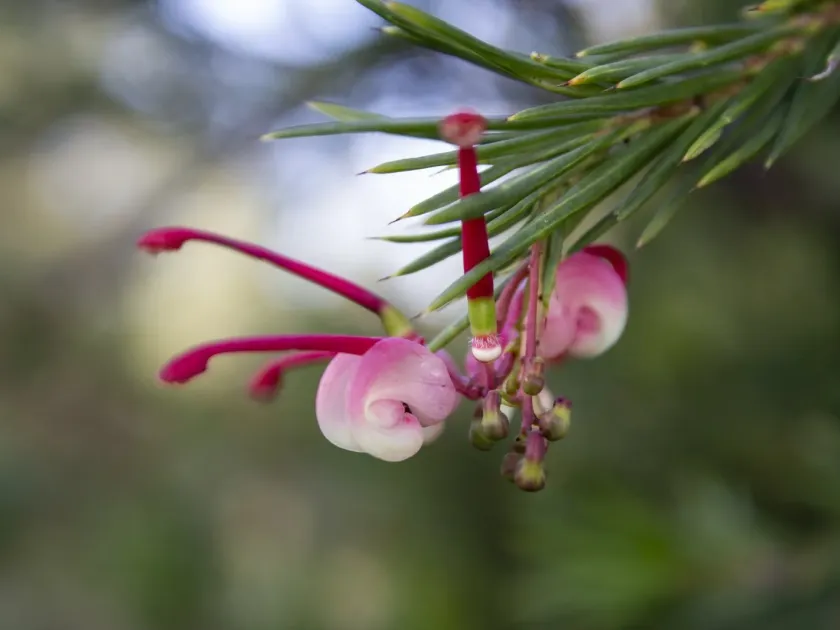
Rosemary grevillea (Grevillea rosmarinifolia) is a hardy evergreen shrub belonging to the Proteaceae family, indigenous to New South Wales and Victoria, Australia. It is widely recognized for its needle-like foliage and unique, brush-like flowers that bloom in shades of red or pink.
The agronomic success of this crop depends heavily on soil composition. It requires sandy, acidic, or neutral soils with excellent drainage. Because the plant has evolved in nutrient-poor soils, it is highly sensitive to phosphorus, necessitating the use of specialized, low-phosphorus fertilizers.
Climatically, the species thrives in Mediterranean-type environments. While it is moderately frost-tolerant, it requires full sun exposure to maintain its compact shape and ensure prolific flowering. Insufficient light often results in "leggy" growth and reduced aesthetic value.
Agronomic management includes careful watering practices. While drought-tolerant once established, young plants need consistent moisture. In home gardening, it is essential to avoid waterlogged conditions, as the root system is highly susceptible to fungal rot in anaerobic soil environments.
The plant serves multiple purposes, primarily in commercial landscaping and domestic horticulture. It is frequently utilized in xeriscaping, erosion control on slopes, and as a habitat plant for native nectar-feeding birds, making it a sustainable choice for environmentally conscious gardens.
Main diseases and pests
Root rot caused by Phytophthora species remains the most significant threat to the Rosemary grevillea. This pathogen thrives in wet, heavy soils, emphasizing the critical importance of selecting well-draining sites for permanent cultivation.
Insect pests, specifically mealybugs and scale insects, are common threats that can sap the plant's vitality. Integrated pest management, including the removal of infested branches and the application of horticultural oils, is recommended to keep the plants healthy without damaging the delicate foliage.