
Grevillea bipinnatifida
Grevillea bipinnatifida R. Br.
Description
Growing requirements
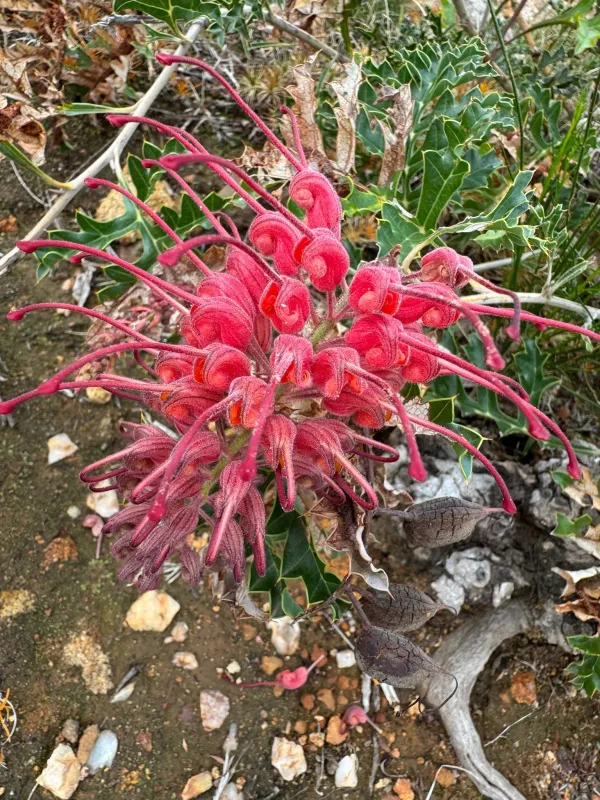
Grevillea bipinnatifida belongs to the Proteaceae family and is a distinctive evergreen shrub originating from Western Australia. It is highly regarded for its fern-like, deeply lobed foliage and vibrant, brush-like flowers that attract local pollinators.
This species thrives in full sun exposure, which is necessary to maintain its compact growth habit and promote maximum flower production. It is well-adapted to Mediterranean-type climates, preferring warm and dry conditions throughout most of the growing season.
Regarding soil requirements, the plant demands excellent drainage. It naturally occurs in sandy or stony soils and is highly intolerant of heavy clays that hold moisture, as this leads to root suffocation and eventual death of the shrub.
The climate must be mild, as the plant is not frost-hardy. In areas where temperatures drop significantly, it should be grown in pots or containers that can be sheltered indoors during the colder months to prevent cold damage.
Routine horticultural maintenance involves light pruning to preserve shape and encourage new growth. It is essential to avoid excessive water and fertilization, particularly phosphorus-rich fertilizers, as the roots are sensitive to high nutrient concentrations.
Main diseases and pests
Root rot is the most significant threat to Grevillea bipinnatifida, usually caused by poor drainage or overwatering. Once a plant is infected with root-rotting fungi, recovery is extremely difficult, making prevention the best strategy.
Insect pests, including scale insects and mealybugs, are common intruders. They settle in the leaf axils and along stems, extracting plant sap and potentially weakening the overall structure of the shrub over time.
Spider mites are another concern, particularly in indoor environments with dry air. They can quickly proliferate, causing stippling or discoloration on the foliage, which reduces the plant's ornamental value.
Chlorosis, or leaf yellowing, can occur due to nutrient imbalances, specifically phosphorus toxicity. This physiological disorder is often misdiagnosed, leading to further incorrect fertilization that worsens the plant's condition.
Effective pest management relies on early detection. Regularly inspecting the undersides of leaves and the junction of branches allows for the quick application of horticultural oils or soaps before the infestation reaches damaging levels.