
Grevillea hybrid
Grevillea bipinnatifida x Grevillea banksii var. forsteri
Description
Growing requirements
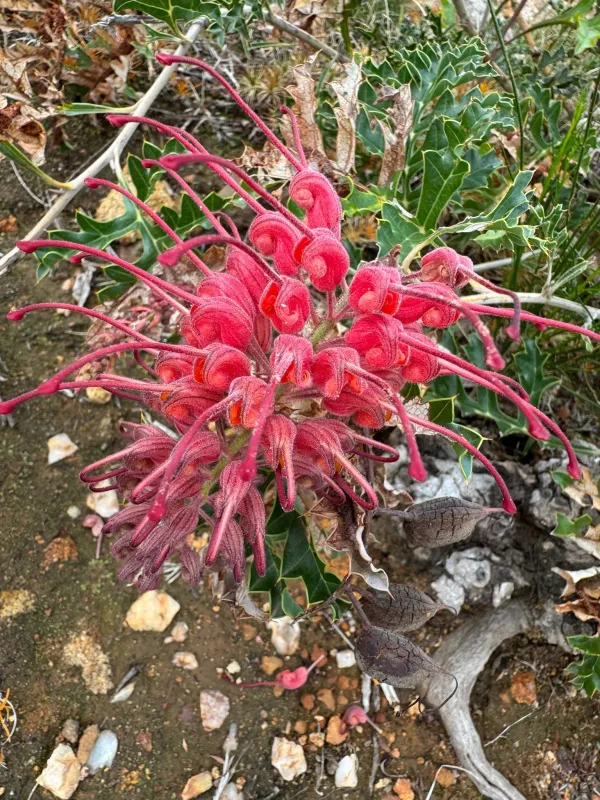
Grevillea hybrid (Grevillea bipinnatifida x Grevillea banksii var. forsteri) is a popular ornamental shrub belonging to the Proteaceae family. Originating from Australia, this cultivar is cherished for its striking, tooth-like red or pink inflorescences that provide a dramatic aesthetic effect in landscape design.
The plant thrives in full sun and requires well-drained, acidic to neutral soil. Because its natural habitat involves nutrient-poor soils, it is highly sensitive to excessive fertilization, particularly phosphorus, which can be toxic to its specialized root system known as proteoid roots.
Climate requirements include warm temperatures, as it is frost-sensitive and performs best in Mediterranean or subtropical climates. If cultivated in colder regions, it must be grown in containers that are moved indoors during the winter months to protect the plant from freezing temperatures.
Maintenance involves regular light pruning to maintain a dense shape and promote continuous flowering. Pruning should be performed immediately after the main blooming period to ensure that the next season's growth is robust and healthy.
Watering practices are critical for this species. While established plants are relatively drought-tolerant, young specimens require consistent moisture without waterlogging. Irrigation should be managed carefully to ensure the soil structure remains aerated and healthy for the root development.
Main diseases and pests
Grevillea hybrids are primarily susceptible to mealybugs and spider mites, especially in glasshouse or indoor environments. These pests can be managed by maintaining proper air circulation and utilizing horticultural oils or soaps when early signs of infestation appear.
Root rot caused by Phytophthora is the most significant pathological threat to this culture. It is primarily triggered by poor drainage and excessive watering. Prevention is key; ensure the planting site is elevated or the potting medium contains sufficient inorganic components like gravel or grit.