
Grevillea crithmifolia
Grevillea crithmifolia R. Br.
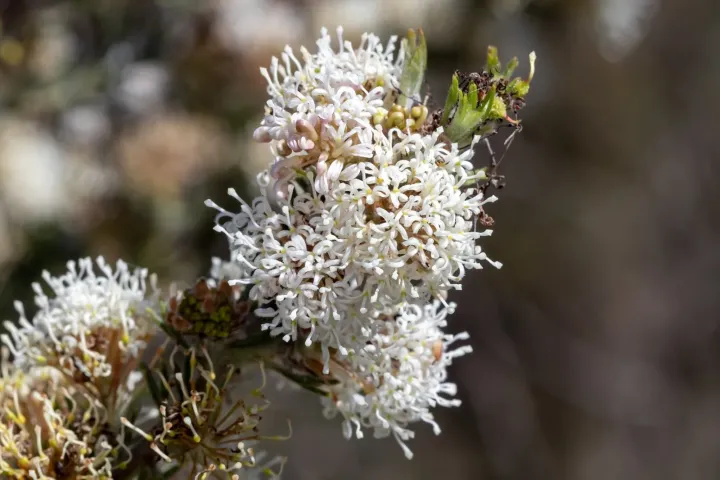
Description
Growing requirements
Grevillea crithmifolia is a resilient, evergreen shrub belonging to the Proteaceae family. Native to the coastal regions of Western Australia, this species is highly valued for its dense foliage and unique capability to thrive in harsh, nutrient-poor, sandy soils.
Botanically, the plant is characterized by its distinct, often succulent-like leaves and specific proteoid root clusters that efficiently scavenge for limited nutrients in wild environments. Its growth habit is typically prostrate or low-mounded, making it an excellent candidate for ground cover.
The cultural requirements for this species are strict regarding drainage. It demands full sun exposure and an exceptionally well-draining soil medium. Any form of waterlogging will quickly lead to root decay, necessitating careful site selection and the avoidance of heavy clay soils.
In terms of climate, it is a Mediterranean-style plant that prefers warm, dry summers and mild winters. While it demonstrates impressive drought tolerance, it does not handle extreme frosts well and is best suited for zones where temperatures remain above freezing.
Agronomic management involves minimal intervention. Pruning is recommended to maintain shape and density, but it should be done carefully to avoid removing too much green tissue. Fertilizer applications must be avoided or kept to very low-phosphorus formulas specifically designed for native Australian plants.
Main diseases and pests
The primary threat to Grevillea crithmifolia is Phytophthora cinnamomi, a soil-borne water mold that causes severe root rot. Maintaining a dry root zone and ensuring adequate soil aeration are the most effective preventive measures against this fatal condition.
Occasional infestations of mealybugs or scale insects may occur, particularly if the plant is grown in sheltered or humid environments. Monitoring for sap-sucking pests during the growing season is advised to maintain the overall vigor and aesthetic quality of the shrub.