
Grevillea banksii
Grevillea banksii R. Br.
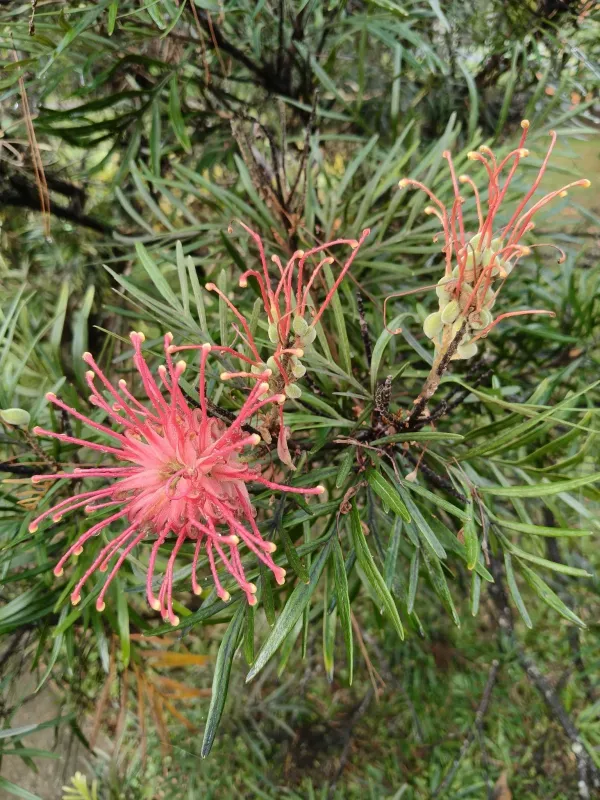
Description
Sowing dates
Propagation of Grevillea banksii is mainly performed via seeds or semi-hardwood cuttings. Seeds have a hard seed coat and usually require scarification to improve germination rates.
Sowing in a controlled environment or nursery should take place in spring. Maintaining a consistent temperature between 20–25 degrees Celsius is essential for successful seedling development.
Cuttings are best taken during the summer months. Using rooting hormones on these semi-hardwood pieces significantly improves the chances of successful establishment.
Young plants are moved to their permanent location once the risk of frost has passed. Care must be taken to minimize disturbance to the sensitive root system during transplantation.
In cooler climates, this species is treated as a container plant, allowing for transition into greenhouses or indoor spaces during colder months to ensure survival.
Growing requirements
As a member of the Proteaceae family, Grevillea banksii requires well-draining, slightly acidic soil. It is notoriously sensitive to high phosphorus levels, which can be toxic.
The plant thrives in full sun exposure. Adequate light is crucial for the development of its characteristic brush-like inflorescences and maintaining structural integrity.
While the species exhibits moderate drought tolerance once established, regular irrigation is required during the active growing season. Drainage must always be prioritized.
Pruning is essential for maintaining a compact shape and promoting dense foliage. It should be conducted immediately after flowering to prevent the plant from becoming leggy.
The soil should be nutrient-poor, as the plant is naturally adapted to the low-fertility conditions typical of its native Australian habitats.
Main diseases and pests
Root rot is the most serious threat, caused primarily by poor drainage or overwatering. Once established, this condition is extremely difficult to reverse.
Pests like spider mites and mealybugs can cause significant damage in dry, hot conditions. Regular monitoring of the foliage is necessary to detect infestations early.
Chemical treatments may be required if manual control fails, but one must ensure that products used are compatible with sensitive native plant species.
Chlorosis is a common physiological disorder often triggered by incorrect soil pH or excessive lime in the water, preventing the uptake of vital micronutrients.
Sanitation practices, including the removal of dead or decaying plant material, are key to preventing the spread of fungal pathogens throughout the canopy.