
Rhaphidophora pertusa
Rhaphidophora pertusa
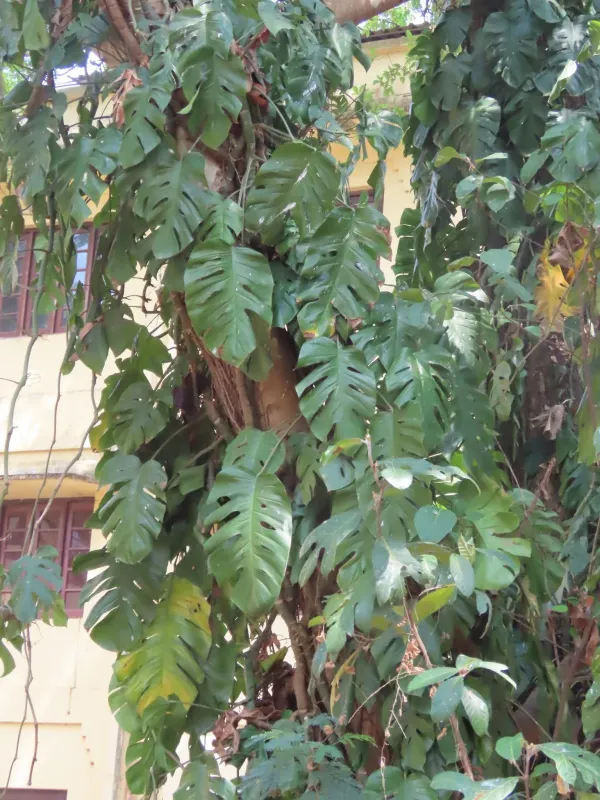
Description
Growing requirements
Rhaphidophora pertusa is a robust climbing plant belonging to the Araceae family. Originating from the tropical rainforests of Southeast Asia, it is well-adapted to climbing vertically by using aerial roots to anchor onto tree trunks and surrounding vegetation.
This species thrives in high humidity and warm temperatures, ideally between 22 and 28 degrees Celsius. Providing a consistent tropical environment is crucial, as the plant is sensitive to cold drafts and significant temperature fluctuations.
The substrate must be porous, well-draining, and rich in organic matter. A mixture composed of coconut coir, bark chips, perlite, and peat moss creates the necessary aeration required for the healthy development of its extensive root system.
Bright, indirect light is essential for maintaining the unique perforated structure of the leaves. While the plant can tolerate lower light levels, doing so will significantly reduce its growth rate and the size of the natural fenestrations on the foliage.
Watering should be managed carefully; it is best to allow the top few centimeters of the soil to dry out before the next irrigation cycle. Overwatering can lead to hypoxia in the root zone, which quickly results in leaf yellowing and stem decay.
Main diseases and pests
Rhaphidophora pertusa is susceptible to common houseplant pests, with spider mites being the most frequent problem, particularly when the ambient air humidity drops below recommended levels.
Scale insects can also infest the stems, creating small, brown, bump-like structures that suck sap and weaken the plant's overall vigor, often leading to secondary infections if left untreated.
Fungal pathogens such as Pythium and Phytophthora can cause root rot if the soil remains waterlogged for extended periods, especially in low-light conditions where transpiration rates are decreased.
Regular monitoring of the underside of leaves and node areas is highly recommended as a preventive measure against infestations that can quickly spread to other plants in the collection.
Maintaining proper hygiene by cleaning the leaves with a damp cloth and ensuring sufficient airflow around the plant helps reduce the risk of both pest outbreaks and fungal diseases.