
Rhaphidophora maingayi
Rhaphidophora maingayi
Description
Growing requirements
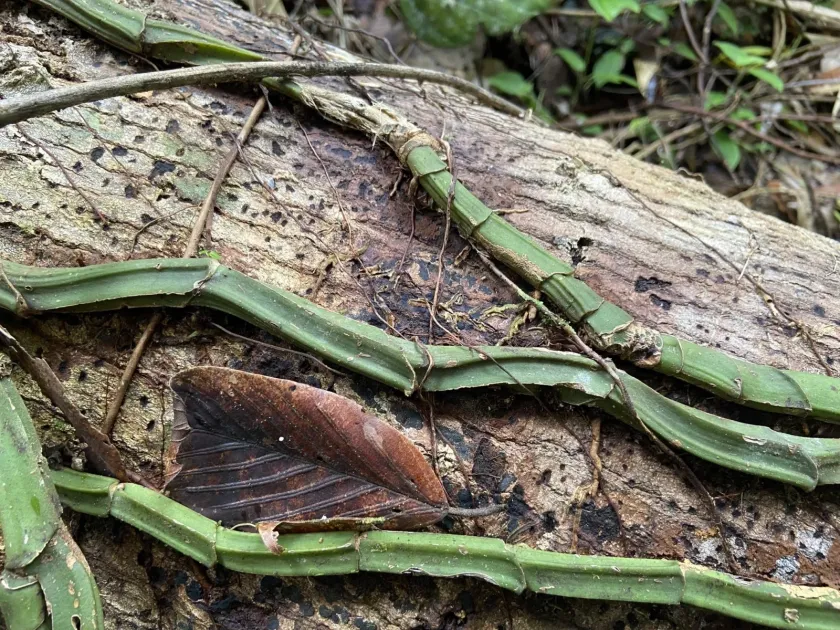
Rhaphidophora maingayi is a striking evergreen climber belonging to the Araceae family. Native to the tropical rainforests of Southeast Asia, this species primarily functions as an epiphyte, using its aerial roots to ascend the trunks of large trees in search of filtered light.
Botanically, the plant is characterized by its robust, succulent-like stems and large, leathery leaves that exhibit impressive foliage patterns. Its growth habit is strictly scandent, requiring a stable support structure such as a moss pole or a trellis to reach maturity and display its characteristic leaf morphology.
Optimal cultivation requires a warm, humid environment with consistent temperatures preferably between 20°C and 28°C. Exposure to cold drafts must be strictly avoided, as the species is highly sensitive to rapid thermal fluctuations, which often lead to premature leaf abscission and stem decay.
The planting medium must be highly porous and well-draining to replicate its natural forest-floor environment. A blend containing orchid bark, perlite, horticultural charcoal, and fibrous peat is recommended to maintain aeration around the roots while providing the necessary moisture retention for healthy growth.
Light levels should remain bright but indirect. High-intensity sunlight will quickly damage the leaves, while insufficient lighting will result in stunted, smaller leaves and attenuated stem growth. Careful placement near east- or north-facing windows is typically ideal for long-term health.
Main diseases and pests
The primary horticultural threats to this species are root and stem rots caused by pathogenic fungi such as Phytophthora and Pythium. These pathogens thrive in waterlogged, compacted soils; therefore, precise irrigation management and the use of high-quality, lightweight substrates are essential.
Insect pests including spider mites and mealybugs are the most common afflictions, particularly when ambient humidity levels are chronically low. Regular misting or the use of humidifiers can significantly reduce the risk of infestation, while systematic cleaning of the foliage keeps the plant resistant to secondary attacks.