
Rhaphidophora megaphylla
Rhaphidophora megaphylla
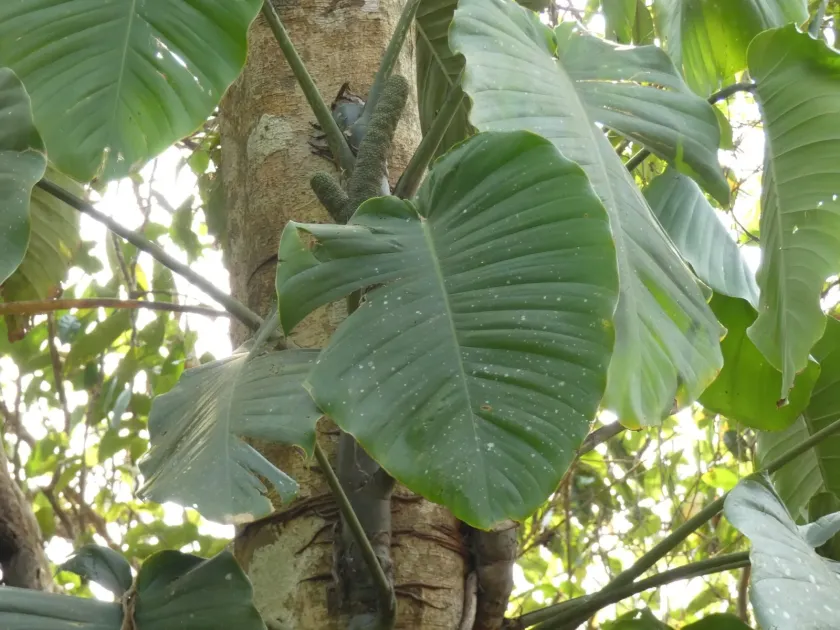
Description
Growing requirements
Rhaphidophora megaphylla is a striking member of the Araceae family, native to the tropical regions of Papua New Guinea. This plant is known for its impressive, large, and structurally complex leaves, making it a highly desirable species for specialized botanical collections and large indoor spaces.
As a hemiepiphyte, this species utilizes its aerial roots to climb trees in its native habitat. When cultivated, it requires a sturdy support system, such as a moss pole, to reach its full size and display the mature leaf morphology characteristic of the species.
The plant thrives in warm, humid conditions with temperatures consistently between 22 and 28 degrees Celsius. Any drop below 15 degrees Celsius can cause significant physiological stress and retard the growth process, potentially damaging the tropical foliage.
Light requirements for this species are moderate to high, but strictly indirect. Excessive direct sunlight can lead to leaf scorch, while deep shade will cause the plant to become leggy and lose its characteristic leaf size and density.
The growing medium must be highly porous and well-draining, mimicking the forest floor debris. A mixture containing orchid bark, perlite, pumice, and high-quality peat or coco coir is ideal to prevent root compaction and allow for proper root aeration.
Main diseases and pests
Common pests affecting Rhaphidophora megaphylla include scale insects and mealybugs, which tend to hide in the axils of the leaves and along the main stem, draining nutrients from the plant tissue.
Root rot is the most common pathology, usually caused by overwatering or the use of an overly dense potting medium that prevents oxygen from reaching the root zone, creating an environment for anaerobic bacteria.
Fungal infections, such as leaf spot, may occur when the foliage remains damp for too long in stagnant air, emphasizing the importance of good air circulation around the plants to prevent moisture accumulation.
Spider mites can be particularly problematic during winter months when indoor heating lowers the relative humidity, requiring regular monitoring and misting to maintain an unsuitable environment for these pests.
Proactive management involves routine inspections of the undersides of leaves and stems, as well as the application of horticultural oils or systemic insecticides if pest populations exceed the threshold for safe plant growth.