
Rhaphidophora pachyphylla
Rhaphidophora pachyphylla
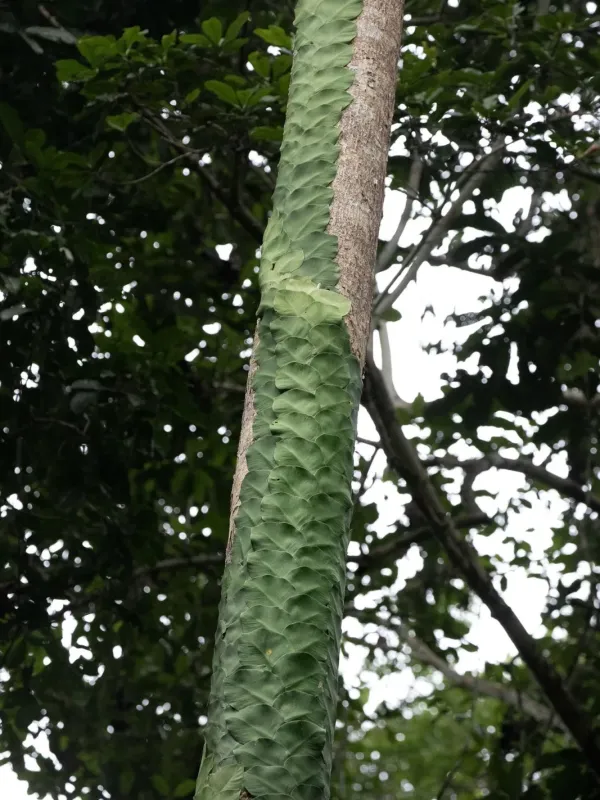
Description
Growing requirements
Rhaphidophora pachyphylla is a striking tropical vine belonging to the Araceae family. Originating from the humid forests of Southeast Asia, this plant is well-adapted to the dense, shaded understory of tropical ecosystems where it climbs trees as an epiphyte.
The botanical identity of this plant is defined by its thick, fleshy leaves, which are structurally designed to store moisture. These leaves often have a deep green, glossy appearance, making the species highly sought after by collectors for its aesthetic appeal in interior gardening.
Optimal growth conditions require a tropical climate with temperatures strictly between 20°C and 28°C. Rhaphidophora pachyphylla is sensitive to cold drafts and rapid temperature fluctuations, which can cause significant stress to the plant and inhibit its vegetative growth.
Regarding soil requirements, the species thrives in a well-draining, nutrient-rich, and slightly acidic potting medium. A mixture of bark, coco coir, and perlite is ideal, as it mimics the natural epiphytic growing conditions and prevents the roots from sitting in stagnant water.
Economically, the plant is widely utilized in the horticultural industry as a premium decorative indoor specimen. It is commonly used in professional landscaping and residential vertical gardens, where it is trained to grow on moss poles or wall-mounted supports.
Main diseases and pests
The most frequent pests affecting Rhaphidophora pachyphylla are scale insects and mealybugs. These sap-sucking pests often hide in the crevices of stems and leaf junctions, draining the plant's vitality and causing stunted leaf development if left untreated.
Root rot is the primary threat associated with improper irrigation and poor soil aeration. If the growing medium remains saturated for too long, the root system begins to decay, which is often irreversible without significant horticultural intervention.
Spider mites represent a significant risk, particularly in indoor environments during winter when air humidity levels drop. These pests thrive in dry conditions and can be identified by the fine, silken webbing they construct between leaves and stems.
Prevention involves regular monitoring and consistent care practices, such as maintaining adequate air circulation and moderate humidity levels. Should an infestation occur, immediate application of appropriate organic or synthetic insecticides is highly recommended to protect the foliage.
Cultural practices should emphasize cleanliness; regularly wiping leaves with a damp cloth prevents dust accumulation and allows for early detection of potential outbreaks. By ensuring optimal hygiene, growers can significantly minimize the risks posed by both pests and common fungal diseases.