
Rhaphidophora hayi
Rhaphidophora hayi
Description
Growing requirements
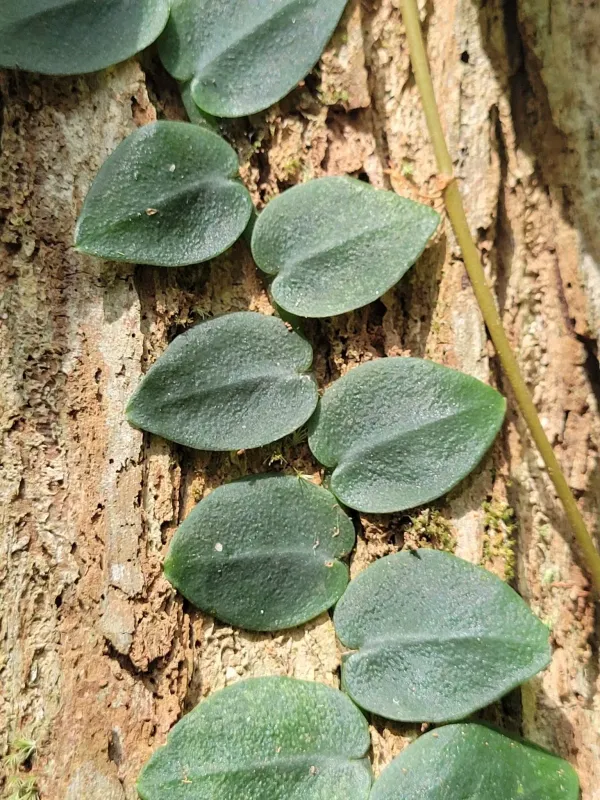
Rhaphidophora hayi is a unique climbing member of the Araceae family, native to the tropical rainforests of Queensland, Australia. This plant is taxonomically distinct due to its specialized juvenile growth form, where leaves overlap each other perfectly against a vertical surface.
Climate requirements necessitate a stable environment with high atmospheric humidity, ideally maintained above 60-70%. The plant thrives in temperatures between 20°C and 27°C, requiring protection from cold drafts and sudden temperature fluctuations that can cause leaf yellowing and abscission.
The substrate must be highly aerated and drainage-oriented to mimic the epiphytic conditions of the canopy. A mixture composed of orchid bark, perlite, and sphagnum moss provides the structural integrity and aeration necessary for the development of healthy, climbing adventitious roots.
Regarding cultivation, light intensity must be filtered yet bright enough to sustain the plant's metabolic needs. Excessive shade causes the internodes to stretch, leading to a loss of the compact, shingling morphology that makes this species highly desirable for ornamental horticultural use.
Irrigation practices should follow a cycle of drying out the top layer of the soil to prevent waterlogged roots. Because the plant is sensitive to salt accumulation, the use of filtered or distilled water is recommended to maintain the aesthetic quality of the foliage over long periods.
Main diseases and pests
Pests are a primary concern, with spider mites being the most frequent visitors in low-humidity environments. Mealybugs may also hide within the overlapping layers of the shingling leaves, making early detection and manual cleaning with diluted horticultural soap essential for effective management.