
Southern rata
Metrosideros umbellata
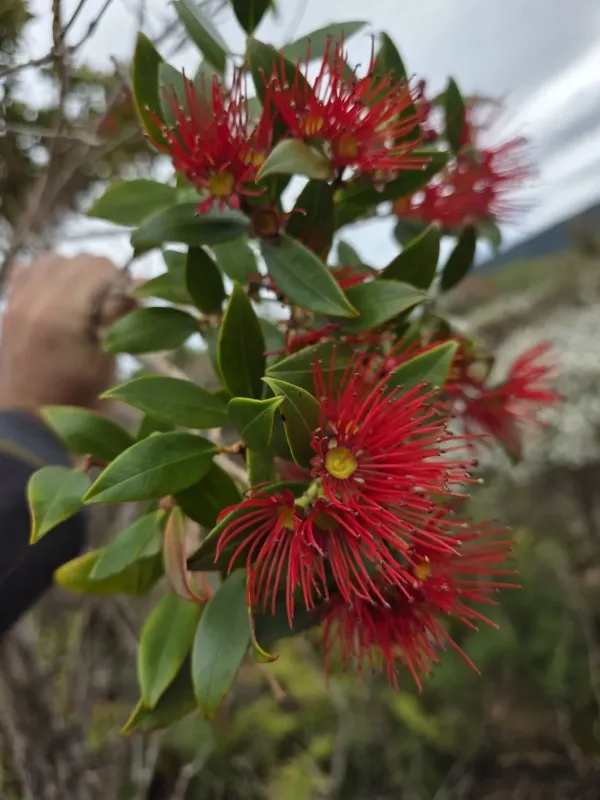
Description
Growing requirements
Southern rata (Metrosideros umbellata) is a prominent member of the Myrtaceae family, native to the temperate coastal forests of New Zealand. This evergreen tree is highly regarded for its striking red flowers and deep green foliage.
The species requires a cool, moist climate and is particularly well-suited to regions with high atmospheric humidity. It is sensitive to extreme heat and prolonged drought, requiring consistent moisture and shelter from scorching winds.
Optimal soil conditions for this culture involve well-draining, acidic to neutral soils enriched with organic matter. Proper soil aeration is crucial, as waterlogged conditions quickly lead to root decline and eventual plant death.
Botanically, the tree is known for its slow growth rate and ability to act as an epiphyte in some natural settings, though it is primarily a woody tree. Its flowers are terminal clusters of stamens that attract various pollinators.
In landscaping, it serves as a robust specimen tree in seaside locations, provided the maritime conditions remain within its tolerance range. Its wood is notoriously strong and has historical utility in construction.
Main diseases and pests
The most serious threat to Metrosideros umbellata is myrtle rust, caused by the fungus Austropuccinia psidii. This pathogen aggressively attacks young leaves and developing shoots, often causing systemic damage.
Common horticultural pests include scale insects and spider mites, which can cause leaf drop and stunted growth. Integrated pest management strategies, including biological controls, are recommended for long-term health.
Root pathogens such as Phytophthora species often proliferate in heavy, poorly drained soils, causing severe collar and root rot. Maintaining good drainage is the most effective preventative measure against these infections.
Physical injuries to the bark can create entry points for secondary wood-rotting fungi. Pruning should be performed only when necessary, using sterilized equipment to minimize the risk of infection.
Vigilant monitoring of foliage color and crown density is essential. Any signs of wilting or spotting should be addressed immediately with appropriate systemic fungicides or cultural adjustments.