
Kermadec pōhutukawa
Metrosideros kermadecensis
Description
Growing requirements
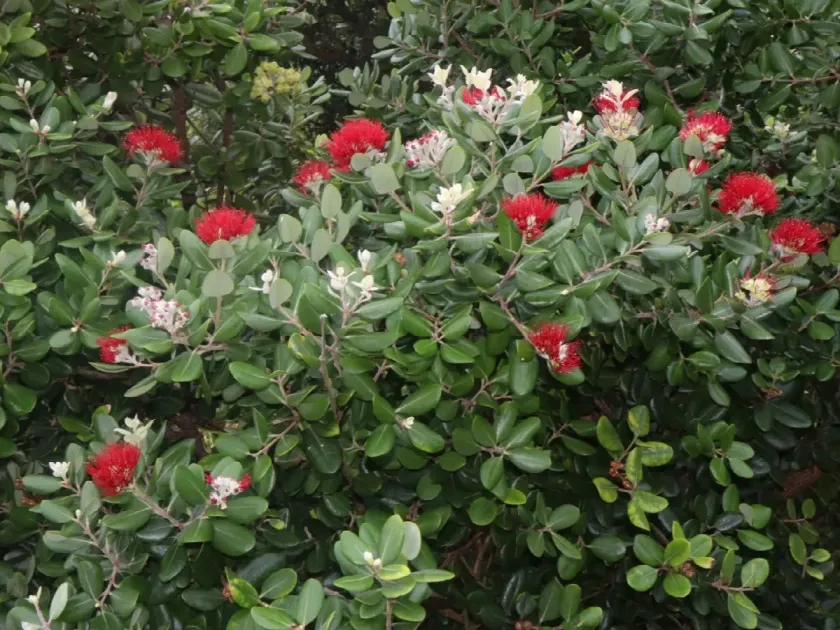
Metrosideros kermadecensis is a robust evergreen tree within the Myrtaceae family. Known for its leathery foliage and striking flowers, this species serves as a prominent feature in both coastal landscapes and ornamental horticulture due to its natural resilience.
Native to the Kermadec Islands, this plant thrives in environments that provide consistent maritime humidity. While it is adapted to island climates, it has been successfully introduced to similar mild climates globally where frost is absent or minimal.
Soil requirements for optimal growth involve a well-draining, nutrient-rich medium. The species performs best in slightly acidic to neutral soils; however, it demonstrates considerable tolerance to various soil types provided that aeration is sufficient to avoid root asphyxiation.
Climatic preferences dictate that the plant requires full sun exposure to maintain its dense foliage structure and encourage blooming. In regions with cooler winters, cultivation in containers is standard practice to allow the plant to be moved to a protected environment.
Agrotechnical management includes regular irrigation, though the plant is drought-tolerant once established. Pruning is essential for maintaining the desired form and encouraging secondary growth, which helps in managing the plant size in restricted spaces.
Main diseases and pests
The primary pests affecting Metrosideros kermadecensis include scale insects and mealybugs. These sap-sucking pests can weaken the plant and promote the growth of sooty mold, necessitating proactive monitoring and, if required, the application of horticultural oils.
Pathogenic threats include various root rot fungi, often stemming from improper irrigation practices. Maintaining a high standard of hygiene around the root zone and ensuring adequate airflow between branches are the most effective strategies for long-term plant health.