
New Zealand Christmas tree
Metrosideros excelsa Soland. ex Gaertn.
Description
Growing requirements
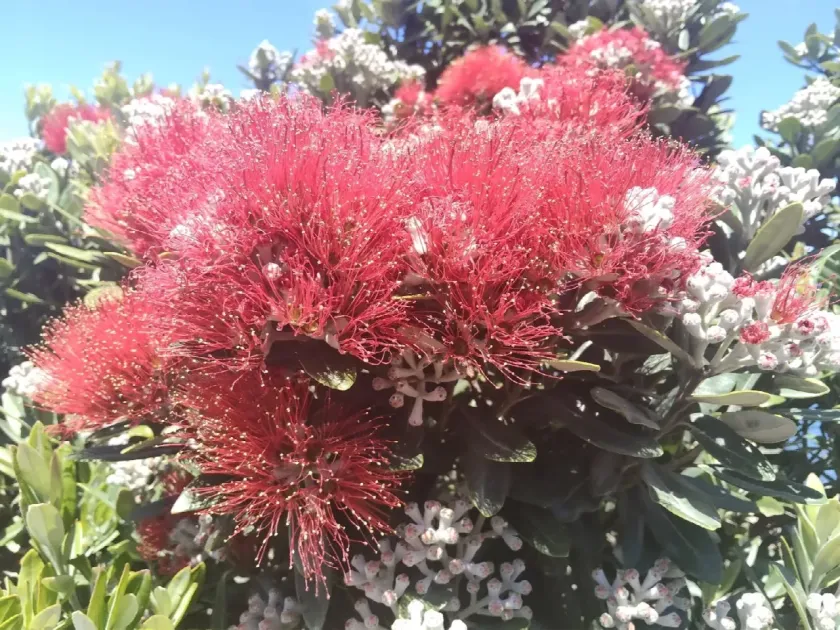
The New Zealand Christmas tree (Metrosideros excelsa) is a prominent member of the Myrtaceae family. Native to coastal New Zealand, it is a sturdy evergreen tree known for its spectacular red flowers and ability to thrive in challenging maritime environments.
Climatic requirements focus on avoiding frost. While mature trees can withstand mild cold snaps, young specimens are highly sensitive to freezing temperatures. In non-native regions, this crop is grown as a container plant, allowing it to be moved indoors during colder months.
Soil requirements for this species involve well-draining, nutrient-rich media. It performs best in slightly acidic to neutral soils that do not retain excess water. Proper drainage is essential to prevent root asphyxiation and promote vigorous growth of the root system.
Lighting is a fundamental requirement for the success of Metrosideros excelsa. It demands full sun exposure to maintain its compact shape and to ensure prolific flowering. In low-light indoor conditions, the tree often becomes leggy and fails to produce its iconic blossoms.
Cultural practices include consistent watering throughout the active growing season. While the tree can tolerate occasional dry periods once established, container-grown plants require regular moisture. Supplementing with a balanced liquid fertilizer during spring and summer supports flowering density.
Main diseases and pests
Scale insects represent a major threat to this species in greenhouse and domestic environments. These pests attach themselves to branches, sapping nutrients and causing a decline in overall plant vigor. Early detection and treatment with horticultural oils are effective control methods.
Spider mites are a common issue in dry indoor climates, attacking the foliage and causing stippling. Increased air humidity and regular misting of the leaves are standard preventative measures to keep these pests at bay.
Root pathogens, particularly Phytophthora species, thrive in waterlogged conditions. These pathogens cause root rot, leading to wilting and collapse of the plant. Maintaining adequate soil aeration and avoiding overwatering are critical management strategies.
Fungal leaf spot diseases may appear if the canopy lacks proper air circulation. Removing infected leaves and applying copper-based fungicides can help contain the spread of these pathogens under humid environmental conditions.
Nutrient imbalances, particularly iron chlorosis, can occur if the soil pH is too high, inhibiting the uptake of essential elements. Regular testing of the growing medium and adjustment of pH levels are necessary to maintain healthy, vibrant green foliage.