
Northern Rata
Metrosideros robusta A. Cunn.
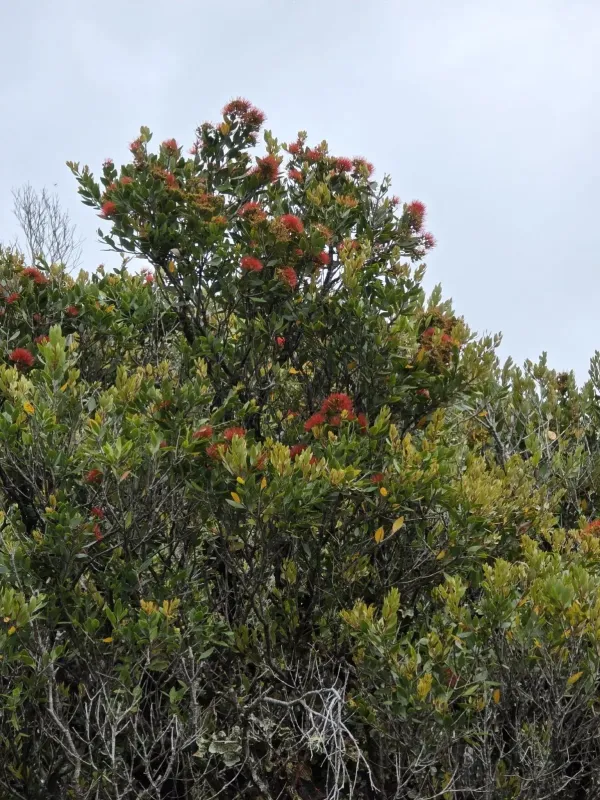
Description
Growing requirements
Northern Rata (Metrosideros robusta) is a massive evergreen tree native to New Zealand, belonging to the Myrtaceae family. It is renowned for its remarkable life cycle: it often begins life as an epiphyte in the canopy of a host tree, eventually sending down roots that strangle and eventually replace the original host.
The cultivation of this species requires a temperate, maritime climate with consistent moisture levels. It thrives in environments where high atmospheric humidity is maintained, preventing the drying of the aerial roots during the early stages of development and ensuring steady growth rates for established specimens.
Soil requirements focus on excellent drainage and the presence of organic matter. While the tree can establish itself in various substrates, it performs best in deep, fertile soils that do not suffer from waterlogging, as the root system is highly sensitive to soil aeration levels and fungal pathogens.
Agricultural management involves careful site selection and protection of saplings during the first few years. Given its epiphytic nature, artificial propagation requires careful mimicry of natural light conditions and substrate composition to ensure the healthy transition of the plant from its juvenile to its adult form.
Commercially, Northern Rata is valued for its extremely dense, heavy, and durable wood. Historically and in modern timber operations, the wood has been utilized for bridge construction, high-quality furniture, and boat building due to its natural resistance to decay and structural integrity under stress.
Main diseases and pests
The primary threat to the health of Northern Rata populations is the invasive Australian brushtail possum. These animals browse heavily on the leaves and terminal shoots of the trees, leading to severe crown dieback and, if left unchecked, the eventual death of the entire tree.
Furthermore, physiological stress from prolonged drought conditions can predispose the trees to infestations by pests and fungal diseases. Maintenance of local biodiversity and the management of invasive species are essential to the long-term sustainability of forests containing this species.