
Metrosideros collina
Metrosideros collina (J. R. Forst. & G. Forst.) A. Gray
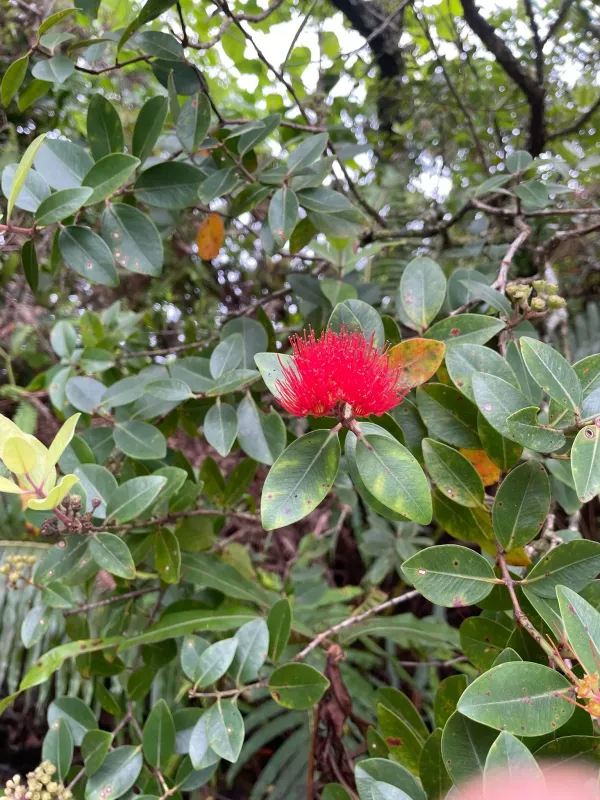
Description
Growing requirements
Metrosideros collina is a notable evergreen tree or shrub within the Myrtaceae family. Native to the Pacific Islands, including Hawaii and French Polynesia, this plant is naturally adapted to thriving in diverse volcanic landscapes and coastal environments.
To successfully cultivate this species, it is essential to provide environmental conditions that mimic its native habitat. The plant demands bright, indirect sunlight for several hours a day and high ambient humidity to support its dense, glossy foliage and vigorous development.
Soil requirements for Metrosideros collina are centered on excellent drainage. A slightly acidic to neutral substrate, enriched with organic matter and modified with perlite or gravel, prevents root rot and encourages healthy nutrient uptake by the root system.
Agricultural management includes precise watering cycles; the soil should remain moist but never waterlogged. As a temperature-sensitive species, it must be protected from frost and freezing conditions, making it an ideal candidate for greenhouse or conservatory growth in cooler climates.
In terms of хозяйственное (economic) utility, Metrosideros collina is highly prized as a decorative horticultural crop. Its spectacular brush-like flowers make it a centerpiece in landscaping, particularly in tropical and subtropical regions where it serves as a robust ornamental shrub.
Main diseases and pests
Pest management for Metrosideros collina focuses on common sap-sucking insects. Scale insects and mealybugs are the primary threats, often clustering on the underside of leaves and stems, necessitating manual removal or specific horticultural oil treatments.
Root system health is frequently challenged by water-related issues. Excessive irrigation in heavy, non-porous soil media quickly leads to fungal root rot, which is often fatal if not identified early through the yellowing of foliage and wilting.
The spider mite is a persistent threat in indoor environments with low humidity. Regular misting of the canopy and maintaining optimal airflow around the plant are effective preventative measures against significant infestations.
Fungal leaf spots can manifest under conditions of poor ventilation and high humidity. Proper spatial management and ensuring the foliage stays dry during the night can significantly reduce the risk of such foliar pathogens.
Integrated pest management strategies are highly effective for this plant. Regular inspections and maintaining optimal environmental parameters keep the plant vigorous enough to naturally resist most minor outbreaks and common botanical pathogens.