
Metrosideros perforata
Metrosideros perforata (J.R. et G. Forst.) A. Rich.
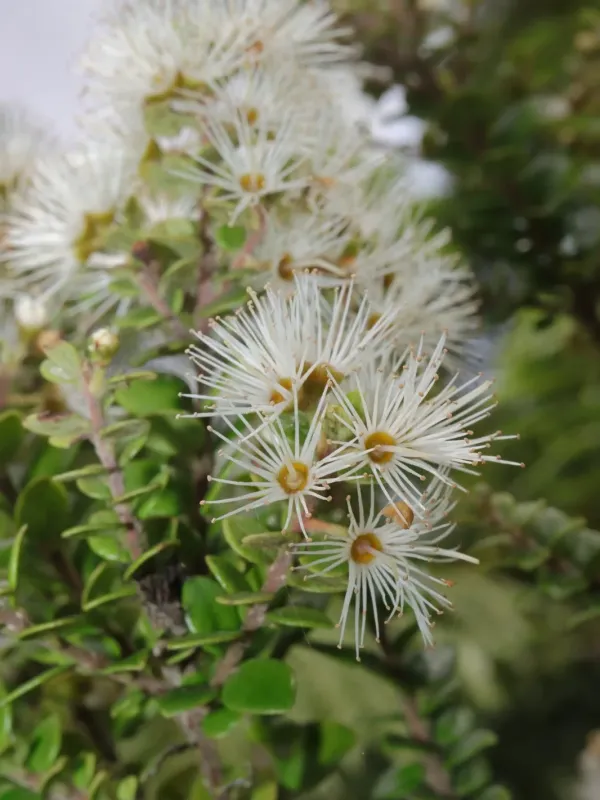
Description
Growing requirements
Metrosideros perforata, commonly known as white rata, is an evergreen woody vine belonging to the Myrtaceae family. Native to New Zealand, it naturally inhabits forest margins and coastal areas, where it climbs trees using small, adventitious rootlets.
This species thrives in temperate to subtropical climates. It is sensitive to frost, which makes it suitable for cultivation in protected environments like conservatories or greenhouses in regions with cold winters. It requires consistent ambient humidity for optimal foliage health.
The soil for this crop must be well-drained, porous, and nutrient-rich, with a slightly acidic to neutral pH. Avoid heavy clay soils that retain excessive moisture, as they significantly increase the risk of root pathogens and eventual decline of the plant.
Light requirements are high, yet the plant prefers bright, filtered sunlight rather than harsh, direct midday exposure. In greenhouse settings, applying shading cloth during peak summer months is a common practice to maintain the deep green color of the leaves.
Maintenance involves routine watering to keep the substrate consistently moist but not waterlogged. Periodic pruning is essential to control the vigorous vining habit and to encourage a denser branching structure, which improves the overall ornamental quality.
Main diseases and pests
The most common pests affecting Metrosideros perforata include scale insects and mealybugs, which tend to congregate in the axils of leaves and along stems. Early detection and treatment with horticultural soaps or systemic insecticides are highly recommended.
Root rot, often caused by Phytophthora or Pythium species, remains the most critical threat to plant survival. It is almost always associated with poor drainage, overwatering, or contaminated propagation media during the nursery phase.
Fungal leaf spots can occur if foliage remains wet for extended periods in environments with poor air circulation. Improving airflow around the plants and avoiding overhead irrigation can effectively reduce the incidence of these fungal infections.
Spider mites are a persistent threat, particularly when indoor plants are kept in low-humidity conditions. Regular monitoring for fine webbing on the undersides of leaves allows for quick intervention before the infestation becomes severe.
Nutrient deficiencies, specifically iron chlorosis, can occur if the pH balance of the substrate is not maintained correctly. Regular soil testing and the application of chelated iron supplements are standard practices in professional plant nurseries.