
Variable flower
Pseuderanthemum variabile
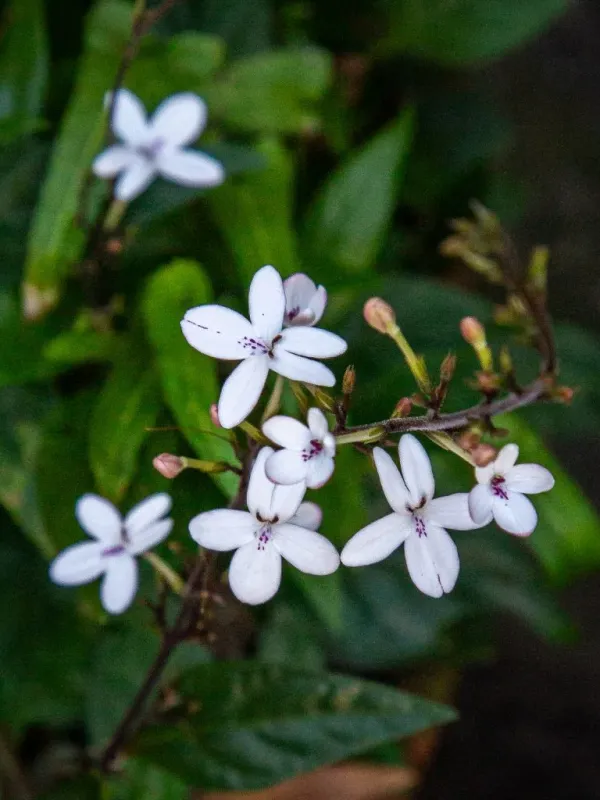
Description
Growing requirements
Pseuderanthemum variabile, known as the variable flower, is a perennial herbaceous plant belonging to the Acanthaceae family. It is native to the coastal regions and forests of eastern Australia.
This species is valued in horticulture for its diverse foliage and creeping growth habit. It thrives in humid environments and prefers warm temperatures, ideally between 18°C and 26°C.
The plant requires well-draining, nutrient-rich potting media to perform optimally. Maintaining a balanced soil moisture level is critical to preventing root issues while ensuring continuous vegetative growth.
Regarding light, it prefers partial shade or dappled light conditions. Too much exposure to direct sunlight leads to leaf scorching, while extreme shade can inhibit the plant's characteristic leaf coloration.
Economically, it serves as an ornamental groundcover or indoor plant in temperate regions. It is highly appreciated for its ability to adapt to varying levels of indoor light and moderate humidity.
Main diseases and pests
Common pests affecting Pseuderanthemum variabile include spider mites, mealybugs, and aphids, especially when grown in indoor environments with limited airflow.
Diseases such as fungal root rot and leaf spot are typically triggered by overwatering or high humidity in stagnant air conditions, which favor pathogen propagation.
Effective management includes regular monitoring of leaves, maintaining proper plant spacing, and ensuring that the substrate drainage is unobstructed.
When chemical control is necessary, soft insecticides or horticultural oils are recommended to avoid damaging the delicate foliage of the plant.
- Use of sterilized soil mixes to prevent soil-borne pathogens.
- Maintaining optimal air circulation to reduce humidity stress on leaves.