
Yellow-vein eranthemum
Pseuderanthemum maculatum
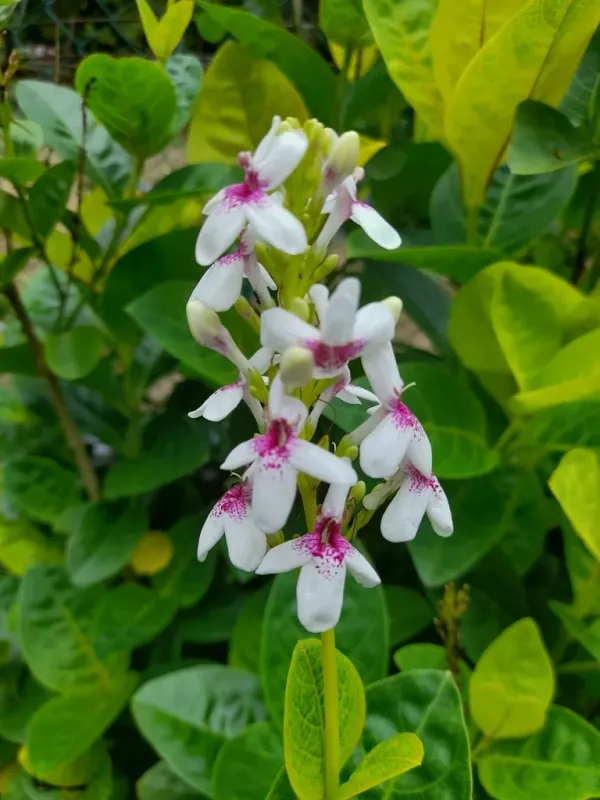
Description
Growing requirements
Pseuderanthemum maculatum, commonly known as Yellow-vein eranthemum, belongs to the Acanthaceae family. It is a perennial tropical shrub originating from the islands of the South Pacific, prized for its decorative foliage.
The plant thrives in environments that mimic its native tropical climate, requiring temperatures between +20°C and +28°C. It is highly sensitive to cold weather and is exclusively cultivated as a houseplant or greenhouse crop in temperate regions.
Bright, indirect light is essential for maintaining the vibrant yellow and green variegation of its leaves. While it can tolerate some shade, significantly low light levels will result in the loss of the characteristic patterns.
For optimal growth, the substrate must be nutrient-rich, porous, and slightly acidic. A mix consisting of peat moss, perlite, and high-quality potting soil provides the necessary aeration and moisture retention for healthy roots.
Agricultural management requires consistent moisture levels without waterlogging. High air humidity is crucial, and the plant benefits significantly from regular misting or the use of humidifiers in indoor environments.
Main diseases and pests
Spider mites are the most common pest, particularly in dry indoor conditions. They feed on the sap of the leaves, causing stippling and eventual yellowing. Regular leaf cleaning is the primary method of prevention.
Root rot, caused by overwatering and poor drainage, is a frequent threat to the plant's health. Affected plants often show signs of wilting and blackened leaf edges, necessitating immediate soil replacement.
Mealybugs are another common challenge, often hiding in the leaf axils. These pests can be managed by manually removing them with alcohol-dipped swabs or using targeted systemic insecticides.
Fungal leaf spots can occur when air circulation is inadequate. Ensuring that the foliage stays relatively dry after misting and improving ventilation helps prevent the spread of fungal pathogens.
To keep the plant vigorous and bushy, regular pruning is necessary. This practice removes overgrown stems and encourages the development of new, healthy lateral growth, maintaining the aesthetic form of the shrub.