
Pseuderanthemum laxiflorum
Pseuderanthemum laxiflorum
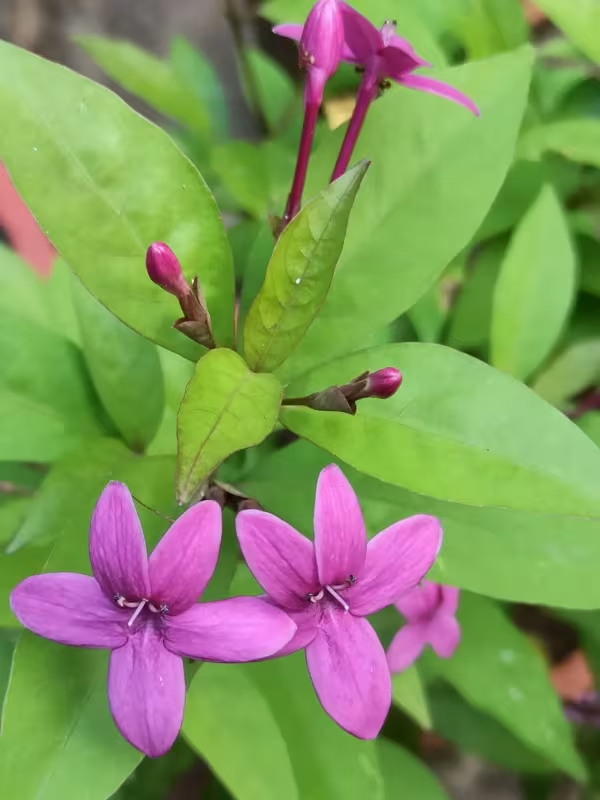
Description
Growing requirements
Pseuderanthemum laxiflorum is an evergreen shrub belonging to the Acanthaceae family, characterized by its ornamental foliage and loose inflorescences. Native to tropical regions, this plant is primarily cultivated in warm, humid climates or indoor conservatory settings.
The plant requires stable ambient temperatures, ideally between 20°C and 25°C. Exposure to temperatures below 15°C can cause significant physiological stress, leaf drop, and root damage, which is why it is typically grown in greenhouses or as a houseplant in temperate regions.
A well-draining, fertile soil mix is essential for healthy development. A combination of potting soil, peat moss, and perlite provides the necessary structure, allowing for adequate aeration of the root system while retaining the moisture that the plant requires.
Regarding light requirements, it thrives in bright, filtered light. Direct sunlight can scorch the leaves, leading to chlorosis or dead patches, whereas insufficient light causes the stems to become spindly and the plant to lose its typical dense, bushy habit.
Cultural maintenance involves frequent misting to maintain high relative humidity and consistent watering to keep the substrate evenly moist. During the active growing season, applying a balanced liquid fertilizer every two weeks supports vigorous growth and flower production.
Main diseases and pests
Spider mites are the most common pest, especially in environments where the air is too dry. These pests thrive in warm, low-humidity conditions, necessitating regular misting or the use of acaricides to protect the plant's health.
Scale insects and mealybugs can also attack the stems and the undersides of leaves, extracting plant sap and weakening the specimen. Manual removal using alcohol-soaked swabs or the application of horticultural oils is recommended for effective control.
Root rot, often caused by overwatering or poor drainage, is a critical threat that can kill the plant quickly. If the soil remains waterlogged for too long, oxygen to the roots is cut off, encouraging fungal pathogens to thrive.
Fungal leaf spot diseases may appear if the foliage stays damp in cool conditions. To prevent this, irrigation should be directed at the base of the plant, and adequate airflow around the foliage must be ensured to minimize the time leaves stay wet.
General hygiene, such as removing fallen leaves and pruning dead wood, helps reduce the population of potential pests and pathogens. Monitoring plant health routinely ensures early detection of any issues before they become severe.