
Solomon's seal
Polygonatum biflorum
Description
Sowing dates
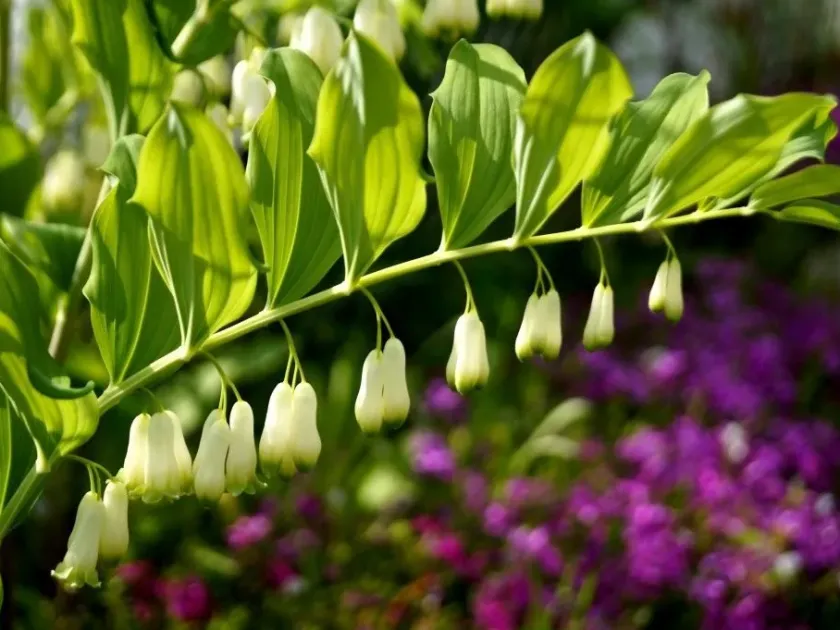
Solomon's seal (Polygonatum biflorum) is a perennial herbaceous plant belonging to the Asparagaceae family. Native to the woodlands of North America, it is a robust species well-adapted to life under forest canopies in rich, organic-heavy soils.
Agricultural and horticultural propagation is primarily achieved through rhizome division. The optimal time for this operation is early spring, just before the emergence of shoots, or late autumn, when the plant has entered dormancy, allowing the root system to settle before the next cycle.
Seed propagation is notoriously slow and unreliable without specific preparation. Seeds require a long period of cold stratification, typically lasting 3 to 4 months. Consequently, sowing is best performed outdoors in the autumn, allowing natural winter temperatures to break seed dormancy.
Rhizomes should be planted at a depth of 5–8 centimeters. Proper spacing is essential for plant health, requiring approximately 30–40 centimeters between individual clumps to allow for natural horizontal spread and rhizome expansion.
The plant demonstrates a slow growth rate in its establishment phase. It typically takes 3 to 4 years for a newly planted patch to become fully established and exhibit its characteristic form and biomass density.
Growing requirements
Polygonatum biflorum is a quintessential shade-loving species. It is highly intolerant of direct, harsh sunlight, which causes leaf scorch and dehydration. A location with filtered light or partial shade is essential for vigorous development.
The ideal soil profile is loose, nutrient-rich, and capable of retaining moisture without becoming waterlogged. The addition of organic matter, such as leaf mold or well-rotted compost, replicates the plant's natural woodland floor environment.
Consistent moisture is required, particularly during the active growing season and the flowering phase. While established plants show some drought tolerance, prolonged dry spells will cause premature senescence of the foliage.
The species is remarkably winter-hardy, surviving in temperate zones without special protection. As a deciduous plant, the above-ground biomass naturally dies back in winter, protecting the crown and rhizome from freezing conditions.
Good drainage is a prerequisite for long-term survival. Although the plant enjoys a moist environment, standing water during the dormant season significantly increases the risk of crown and rhizome rot, which can be fatal to the colony.
Main diseases and pests
The most significant insect pest for this species is the Solomon's seal sawfly. Its larvae can strip foliage rapidly, significantly reducing the plant's ability to store energy in the rhizomes for the following year's growth.
Fungal leaf spots can occur when planting density is too high or air circulation is poor. This is exacerbated by high humidity levels and overhead irrigation, which keeps the leaf surface wet for extended periods.
Rhizome rot is a common issue when soil conditions are too dense or poorly drained. Symptoms include yellowing of the stems and a collapse of the root system, often accompanied by a distinct odor of decay.
Slugs and snails frequently target emerging tender shoots in the early spring. These pests can consume young stems entirely, hindering the plant's progress for the remainder of the growing season.
- Regular monitoring for sawfly larvae during the spring and early summer.
- Ensuring adequate spacing to facilitate optimal airflow within the canopy.
- Using organic mulches to regulate soil moisture while discouraging specific surface-dwelling pests.