
Coleus caninus
Plectranthus ornatus
Description
Growing requirements
Plectranthus ornatus, scientifically recognized within the Lamiaceae family, is a perennial succulent herb native to the tropical regions of East Africa. It is widely cultivated for its ornamental value and its reputation as a highly effective natural repellent against various garden pests.
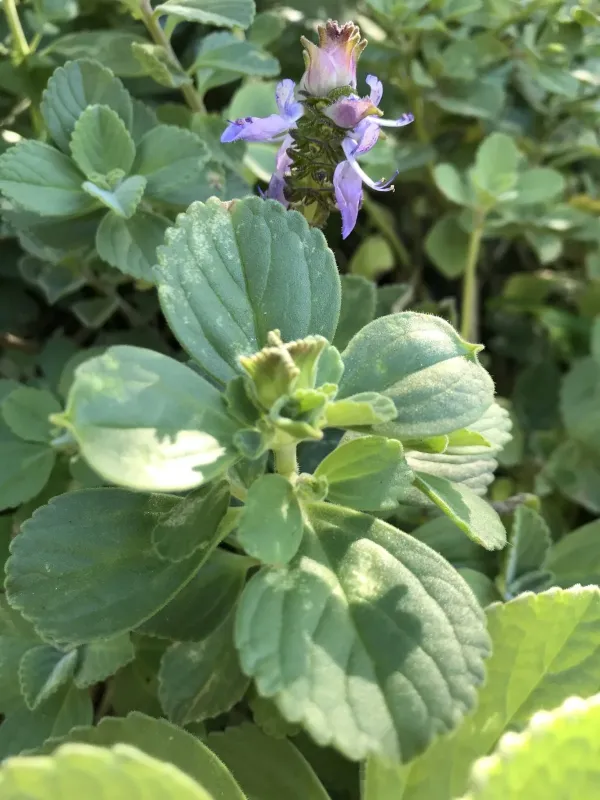
The plant exhibits succulent characteristics, featuring fleshy, aromatic leaves and semi-woody stems. It thrives in well-draining, loose soil that prevents root rot. As a tropical species, it demands significant light exposure to maintain its compact growth habit and intense foliage color.
Climate requirements for Plectranthus ornatus are strict regarding temperature; it is not frost-tolerant and prefers consistent warmth between +18°C and +26°C. In regions with cold winters, the plant must be cultivated in containers and moved indoors or grown as a seasonal annual.
Agronomic management involves periodic pruning to encourage branching and prevent the plant from becoming overly leggy. Fertilization with a balanced liquid feed during the active growth season enhances the production of essential oils, which contribute to its insect-repellent properties.
In terms of usage, the plant is valued both as a ground cover in tropical landscapes and as a container plant on patios. Its biological activity makes it a favorite for organic gardeners seeking to deter nuisance insects like mosquitoes and flies through companion planting.
Main diseases and pests
Root rot, primarily caused by excessive soil moisture and poor drainage, remains the most significant threat to the health of Plectranthus ornatus. To mitigate this, growers should ensure the substrate dries out sufficiently between watering sessions.
Spider mites frequently attack the plant, particularly in low-humidity environments. These pests can be identified by the fine webbing and yellow stippling on the leaves, requiring prompt intervention with water sprays or insecticidal soaps.
Mealybugs are another common concern, often hiding in the dense foliage and leaf axils. Regular inspection and localized treatment help manage these colonies before they cause significant damage to the plant's structural integrity.
Powdery mildew can occur if air circulation is insufficient. The presence of a dusty white coating on leaves indicates the need for improved ventilation and, if necessary, the application of horticultural fungicides.
Whiteflies are also known to colonize the undersides of the leaves in greenhouse settings. Implementing yellow sticky traps and maintaining clean cultivation practices are essential steps in controlling these populations effectively.