
Plectranthus fruticosus
Plectranthus fruticosus L'Her.
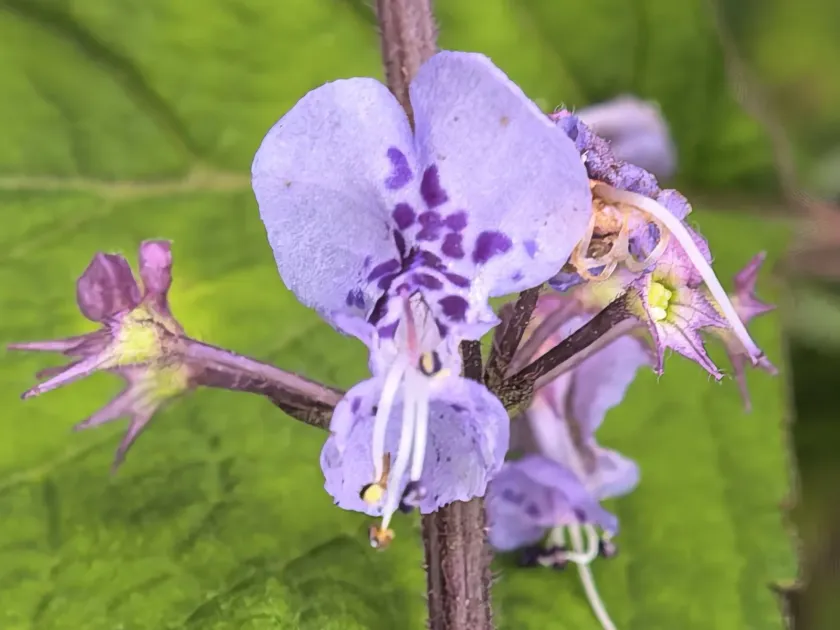
Description
Growing requirements
Plectranthus fruticosus is a robust perennial species belonging to the Lamiaceae family. Native to the forest fringes of South Africa, it has adapted well to controlled environments, making it a popular choice for indoor gardening and conservatory displays. It is characterized by its lush, aromatic foliage and shrubby growth habit.
The botanical structure of the plant features ovate, velvety leaves with serrated margins. As a semi-woody shrub, it responds excellently to pruning, which helps maintain a bushy structure rather than allowing the stems to become overly leggy. Its growth rate is generally vigorous during the spring and summer months under optimal lighting conditions.
When it comes to climate requirements, this species favors temperatures between 18°C and 24°C. It is not frost-tolerant and must be protected from temperatures below 12°C. While it appreciates bright light, it is essential to avoid direct midday sunlight, which can scorch the delicate leaf surfaces and cause stunted growth.
Soil and irrigation management are critical for the health of Plectranthus. A potting mix with high organic content, such as a combination of peat moss, perlite, and loam, is recommended to ensure both moisture retention and proper aeration. Watering should be deep but spaced out, ensuring that the top few centimeters of the soil are dry before the next watering session.
Economically and horticulturally, Plectranthus fruticosus is valued as both an ornamental and a bio-active indoor plant. The leaves contain essential oils that exhibit repellent properties against certain types of insects, contributing to a healthier microclimate in home or office environments. It is often used in mixed containers to create textural interest due to its soft appearance.
Main diseases and pests
The primary threats to Plectranthus fruticosus include pests such as spider mites, mealybugs, and aphids, which thrive in low-humidity environments. Cultural control involves maintaining proper humidity levels and ensuring good air circulation around the plant. If infestations occur, horticultural soaps or neem oil applications are effective remedial measures for organic management.