
Plectranthus ciliatus
Plectranthus ciliatus E. Mey.
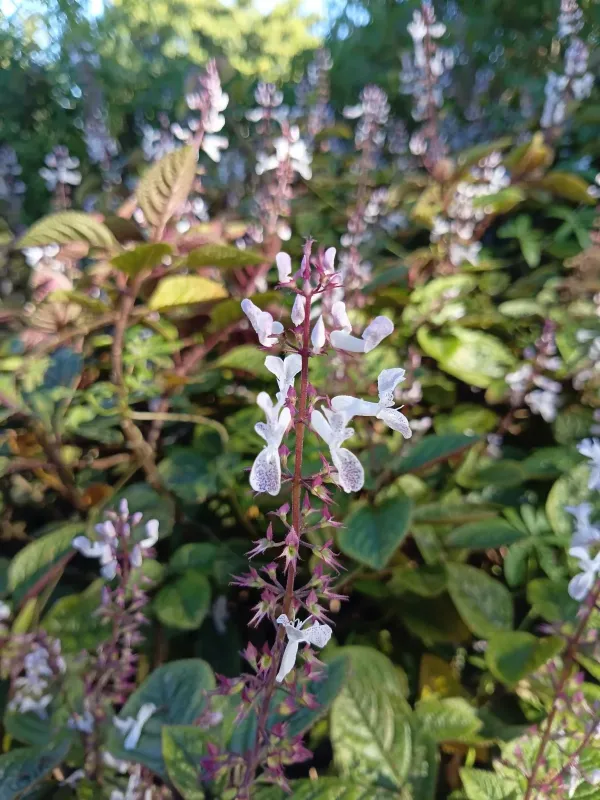
Description
Growing requirements
Plectranthus ciliatus is a perennial herbaceous plant belonging to the Lamiaceae family. Originally native to South Africa, it has evolved to thrive in forest understories and shaded, moist environments.
Botanically, it is known for its spreading stems and ovate leaves with serrated margins. The undersides of the leaves often exhibit a distinct purple hue, which serves as a key identifying characteristic of the species.
The plant requires well-draining, nutrient-rich soil to support its rapid growth habit. It thrives in shaded or semi-shaded locations, as direct sunlight can easily scorch its delicate foliage and lead to moisture loss.
In terms of climate, Plectranthus ciliatus is frost-tender and must be protected during cold seasons. It performs best in temperatures ranging from 18 to 25 degrees Celsius, preferring high humidity and consistent moisture levels.
In horticultural practice, it is primarily used as an ornamental groundcover or an attractive hanging basket plant. Due to its adaptability, it is also a staple in indoor gardening for its dense, colorful foliage growth.
Main diseases and pests
The most common pests affecting this species include spider mites and whiteflies. These insects typically thrive in low-humidity environments, making proper environmental management the first line of defense against infestations.
Fungal issues, such as root rot, often occur due to waterlogged soil or poor drainage systems. Growers are advised to allow the top layer of soil to dry out slightly before the next watering cycle to prevent pathogens.