
Musa balbisiana
Musa balbisiana Colla
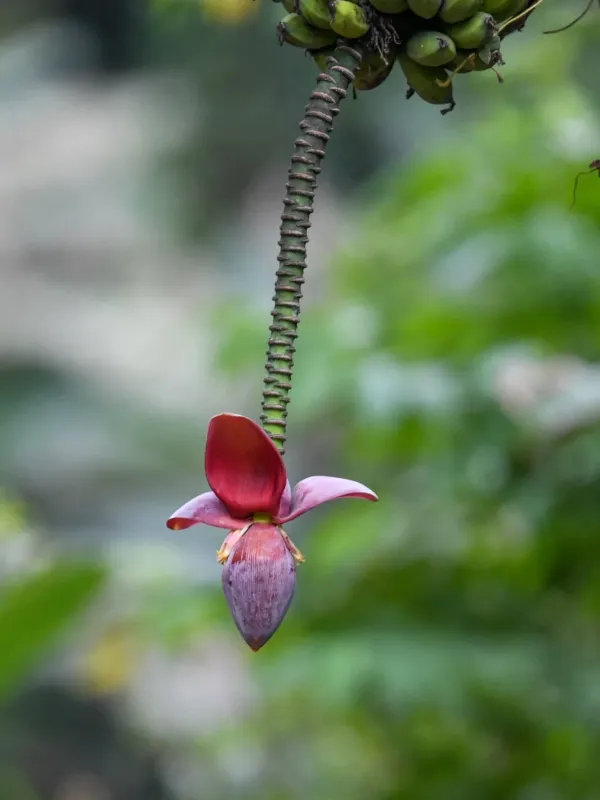
Description
Growing requirements
Musa balbisiana is a wild species of banana belonging to the Musaceae family. It is a large, perennial herbaceous plant that serves as a vital genetic ancestor to many modern edible banana cultivars, contributing essential traits like hardiness.
The native range of this species spans across South and Southeast Asia, including India, Myanmar, and the Philippines. It thrives in diverse environments, ranging from tropical rainforests to secondary growth forests where moisture is abundant.
Growing conditions require deep, well-drained, and nutrient-rich soils. The plant is notably more drought-tolerant than other wild species, which makes it a subject of interest for breeding programs aiming to develop climate-resilient varieties.
Climate requirements include high ambient temperatures and significant humidity. It prefers regions where the growth cycle is not interrupted by cold snaps, as the plant structure is composed primarily of leaf sheaths that are sensitive to freezing.
Agronomic management involves maintaining soil fertility through organic amendments and ensuring proper spacing to facilitate adequate air circulation. This helps manage the canopy density and ensures that individual plants receive sufficient sunlight.
Main diseases and pests
The plant is susceptible to several significant diseases, including Panama disease and Sigatoka leaf spots. These fungal infections can spread rapidly in humid tropical climates, significantly impacting the health of the crop.
Pest pressure is primarily driven by the banana root borer and various species of parasitic nematodes. These pests target the root system, leading to poor nutrient uptake and reduced stability of the pseudo-stem in the soil.
Aphids are a concern as they often act as vectors for debilitating plant viruses. Controlling the population of these insects is essential for maintaining the overall health and productivity of the plantation.
Management of these threats involves a combination of cultural practices, such as clearing debris to destroy breeding sites, and the implementation of biological control methods where applicable.
Using disease-free planting material derived from tissue culture is highly recommended to prevent the introduction of pathogens to new cultivation areas and to ensure long-term sustainability.