
Banana
Musa x paradisiaca L.
Description
Growing requirements
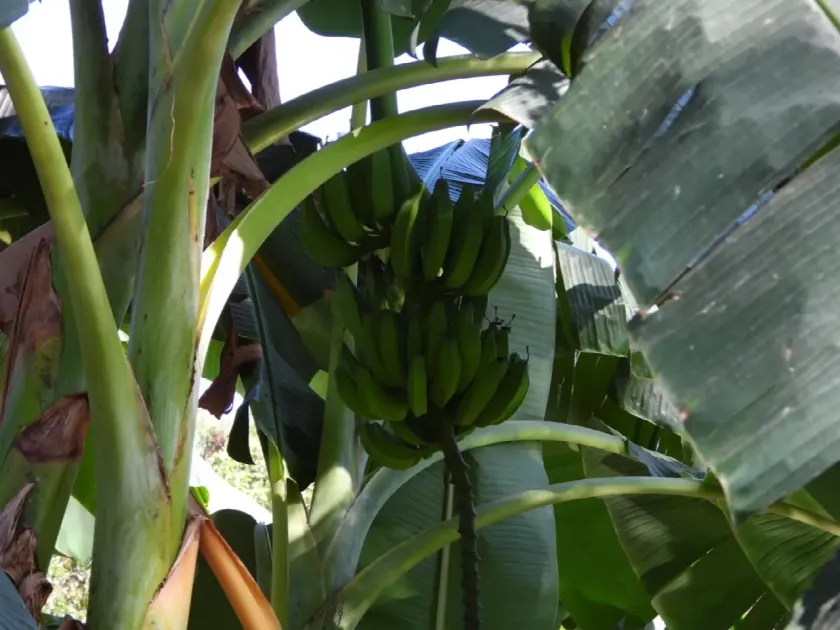
The banana (Musa x paradisiaca) is a member of the Musaceae family and is categorized as a giant herbaceous perennial plant. Its stem, known as a pseudostem, consists of tightly packed leaf bases that grow from an underground corm.
The crop requires a tropical climate to flourish, with temperatures ideally between 26 and 30 degrees Celsius. Consistent warmth is essential, as temperatures below 15 degrees Celsius significantly retard physiological processes and fruit development.
Soil requirements are quite specific: the crop thrives in deep, well-drained, fertile soils with high organic matter content. Optimal soil pH ranges from 5.5 to 7.0, and the presence of sufficient moisture is crucial for the massive leaf biomass production.
Agricultural management involves regular irrigation and strategic fertilization, specifically focusing on potassium, which is vital for fruit quality and plant vigor. Wind protection is also necessary to prevent mechanical damage to the large leaves.
Originating in Southeast Asia, the banana has become a staple crop globally. It is currently cultivated across the tropical belt, where stable environmental conditions support continuous production throughout the year.
Yield
The yield potential of bananas is significant, often reaching between 40 to 60 tons per hectare annually in well-managed commercial plantations. Productivity depends heavily on the chosen cultivar and the application of fertilizers.
Main diseases and pests
Panama disease, caused by the soil-borne fungus Fusarium oxysporum, represents the most severe threat to the industry worldwide. It causes vascular wilt and is notoriously difficult to eradicate from infected soils.
Black Sigatoka is another critical fungal disease that causes necrotic leaf spots, leading to premature defoliation and drastically reduced crop quality. Integrated pest management programs are essential for effective control.
Pests like the banana weevil can devastate plantations by tunneling into the corm, weakening the plant structure. Additionally, various species of plant-parasitic nematodes cause severe root damage, hindering nutrient uptake.
Harvesting
Harvesting takes place when the fruit reaches physiological maturity but is still green and firm. The duration from flowering to harvest typically ranges from three to four months, depending on the cultivar and local climate.
Fruits are harvested in bunches, handled with extreme care to avoid bruising, and then processed for transport. The ripening process is controlled strictly via ethylene treatment upon arrival at the destination markets.