
Musa acuminata
Musa acuminata Colla
Description
Growing requirements
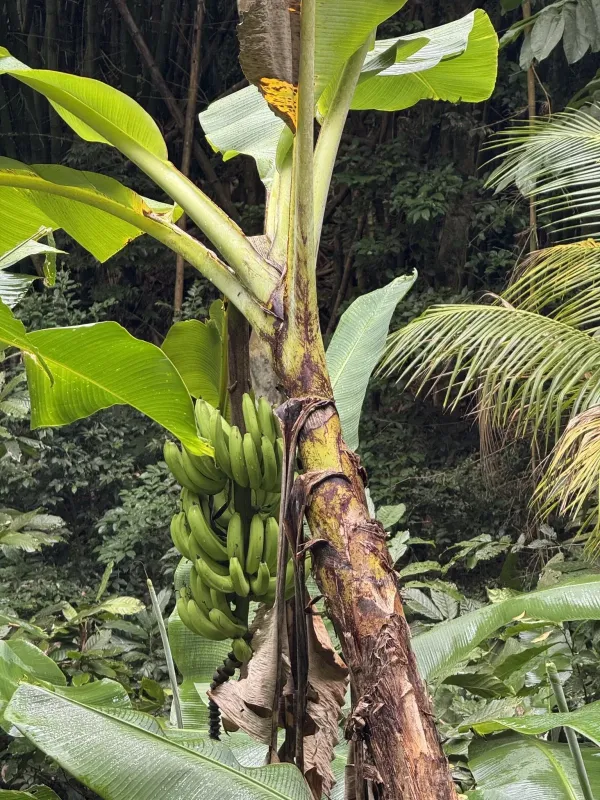
Musa acuminata, commonly known as the wild banana, is a herbaceous perennial plant belonging to the Musaceae family. It is the primary ancestor of most modern edible banana cultivars.
The plant is native to the tropical regions of Southeast Asia. It thrives in high-temperature environments, typically between 25°C and 30°C, and requires a consistent climate throughout the year.
Water management is critical; Musa acuminata requires high levels of soil moisture and atmospheric humidity to sustain its rapid growth rates and large surface area of leaves.
The ideal soil for banana cultivation is fertile, well-draining, and rich in organic matter. Loamy soils with a pH ranging from 5.5 to 7.0 provide the best nutrient availability for the plant.
Due to its broad, delicate leaves, the plant is susceptible to wind damage. Therefore, commercial plantations are often established in areas sheltered from strong winds or utilize windbreaks.
Yield
The yield of Musa acuminata is highly dependent on environmental conditions and management practices. A single banana plant can produce a large bunch weighing between 20 and 50 kilograms.
In intensive cultivation systems, yields can range from 40 to 60 metric tons per hectare annually, provided that nutrient management is strictly controlled through fertilization programs.
Regular application of potassium-rich fertilizers is essential for fruit filling, while nitrogen is necessary to support the vegetative growth of the pseudostem.
Proper sucker management is practiced by farmers to ensure that only the most vigorous shoots are retained, thereby maximizing the resources allocated to the developing fruit bunch.
The reproductive cycle is efficient, with plants typically producing their first bunch of fruit within 10–15 months after planting, followed by continuous production from successive suckers.
Main diseases and pests
Panama disease, caused by the soil-borne fungus Fusarium oxysporum, represents one of the most severe threats to the cultivation of Musa acuminata worldwide.
Black Sigatoka, a fungal leaf spot disease, poses another significant challenge, often leading to substantial yield losses if not managed with regular fungicide applications or the use of resistant varieties.
The banana root borer is a primary insect pest that targets the rhizome and pseudostem, weakening the plant and making it susceptible to wind-throw and secondary infections.
Nematodes, which infest the root system, can severely restrict water and nutrient uptake, leading to stunted plant growth and reduced fruit quality.
Integrated pest management strategies, including the use of certified healthy planting material and crop rotation, are crucial to maintaining plantation health and sustainability.
Harvesting
Harvesting is performed manually when the fruit reaches physiological maturity. Bananas are typically harvested at a mature-green stage to ensure they survive shipping and handling processes.
The entire bunch is cut from the pseudostem, a task that requires careful handling to avoid bruises on the fruit, which could lead to quality degradation or fungal infection during storage.
Post-harvest handling involves washing the fruit, separating it into commercial clusters, and applying treatments to prevent post-harvest rots before packing them into ventilated boxes.
Transportation is strictly temperature-controlled, usually maintained at approximately 13°C to 14°C to delay the ripening process until the fruit reaches the destination market.
Upon arrival, the bananas are placed in controlled ripening rooms where ethylene gas is applied to trigger the natural ripening process, ensuring the fruit reaches the consumer at its peak.