
Musa sumatrana
Musa sumatrana Becc. ex André
Description
Growing requirements
Musa sumatrana is a perennial herbaceous plant belonging to the Musaceae family. It is native to the tropical rainforests of Sumatra, where it thrives in high humidity and warm temperatures year-round.
The species requires a tropical climate for optimal development, with temperatures ideally ranging between 22°C and 30°C. It is extremely sensitive to cold and frost, making it unsuitable for outdoor cultivation in temperate regions without protective structures.
The cultivation medium must be nutrient-rich, loose, and well-drained. A slightly acidic to neutral pH is preferred. Consistent soil moisture is crucial for the plant's vigor, though waterlogging must be strictly avoided to prevent root degradation.
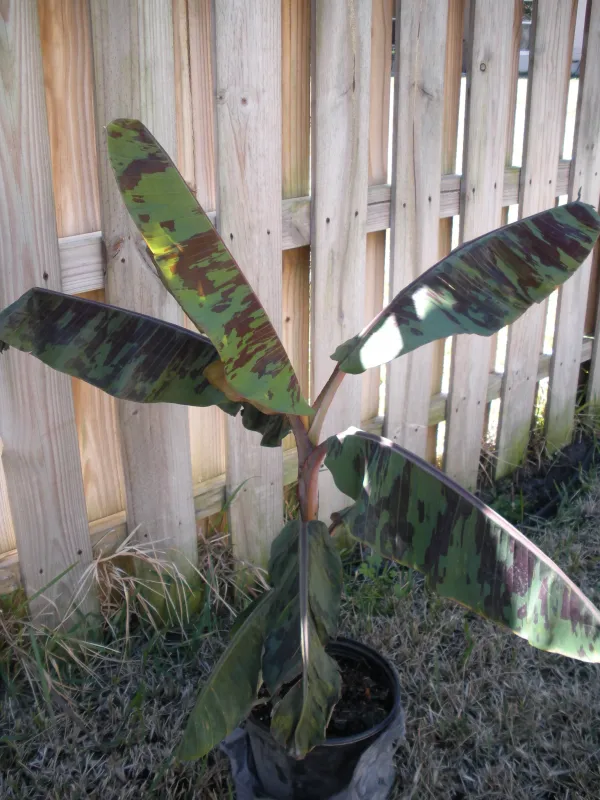
Botanically, this banana is distinguished by its stunning foliage, featuring dark reddish-brown markings on the upper side of the leaf blades. These ornamental patterns make it a highly desirable subject for indoor gardening and specialized conservatories.
Cultural practices include periodic application of balanced fertilizers during the growing season. Adequate spatial arrangement is necessary to prevent physical damage to the large, fragile leaves, which are prone to tearing in high-wind environments.
Main diseases and pests
The primary pests affecting Musa sumatrana include spider mites and scale insects, particularly in greenhouse conditions where air circulation might be limited. Periodic washing and monitoring of leaves are effective prevention strategies.
Fungal pathogens such as Fusarium wilt and various leaf spot diseases are common when humidity is too high and ventilation is poor. Ensuring good airflow and avoiding overhead irrigation can help maintain plant health.