
Wavy-leaved cotton moss
Plagiothecium undulatum
Description
Growing requirements
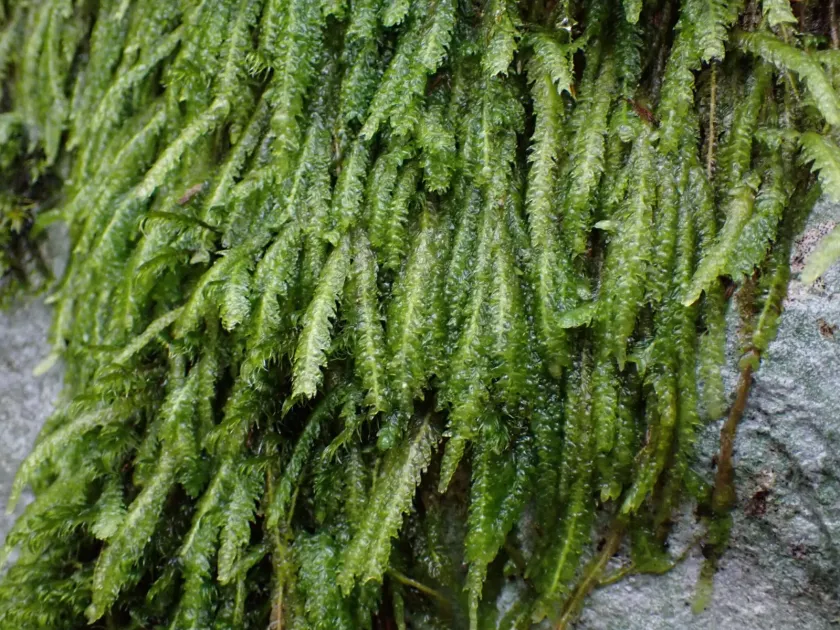
Wavy-leaved cotton moss (Plagiothecium undulatum) is a significant species of the Plagiotheciaceae family. It is recognized by its distinctively wavy, pale-green leaves that form large, lush mats on the forest floor, creating a carpet-like appearance.
Native to temperate forests, this species thrives in highly humid and deeply shaded environments. It is rarely found in direct sunlight, as it requires a stable, moist microclimate to prevent desiccation of its delicate, thin-walled leaf structures.
Regarding soil requirements, it prefers acidic to neutral organic substrates. It frequently colonizes decaying logs, damp leaf litter, or moist soil surfaces in evergreen woodlands, where the moisture retention capacity of the substrate is high.
Botanically, it is a perennial moss that spreads through vegetative growth. Its ability to absorb moisture directly from the atmosphere and the substrate makes it an essential biological indicator of high air humidity and environmental stability within its habitat.
In terms of usage, it is increasingly popular in specialized landscaping, particularly in woodland garden designs, terrariums, and vivariums. Its aesthetic appeal and texture provide a natural, mossy finish that is highly sought after by horticultural enthusiasts.
Main diseases and pests
The primary threat to this species is habitat alteration. Deforestation and clearing of the forest canopy significantly change the light levels and humidity, often resulting in the rapid decline and disappearance of the moss colonies in the affected areas.
Desiccation is a constant risk for Plagiothecium undulatum. Once the moisture level in the surrounding air or substrate drops below a critical point, the moss enters a state of dormancy or dies, often failing to recover if the dry spell is prolonged.
Air pollution represents a severe stress factor. Like many bryophytes, this moss lacks a protective cuticle and absorbs pollutants directly from the air, making it extremely sensitive to heavy metals, sulfur dioxide, and other airborne contaminants.
Invasive plant species and competing vegetation can displace the moss if the microclimate begins to shift toward drier or warmer conditions. Overgrowth by taller herbaceous plants may also deprive the moss of the necessary diffuse light it requires for photosynthesis.
Pathogenic fungi can become a problem in artificial environments with poor airflow. When cultivated in confined spaces, excessive moisture without adequate circulation encourages the growth of molds that can rot the moss stems and kill the entire mat.