
Plagiothecium curvifolium
Plagiothecium curvifolium
Description
Growing requirements
Plagiothecium curvifolium is a perennial moss species belonging to the Plagiotheciaceae family. While not an agricultural crop, it is an essential component of the forest floor, contributing to moisture retention and soil health in temperate woodland environments.
This species naturally inhabits shaded, humid environments, such as decaying wood, tree bases, and nutrient-rich soil patches. Its geographical distribution focuses on the northern forest zones where consistent atmospheric moisture is available throughout the growing season.
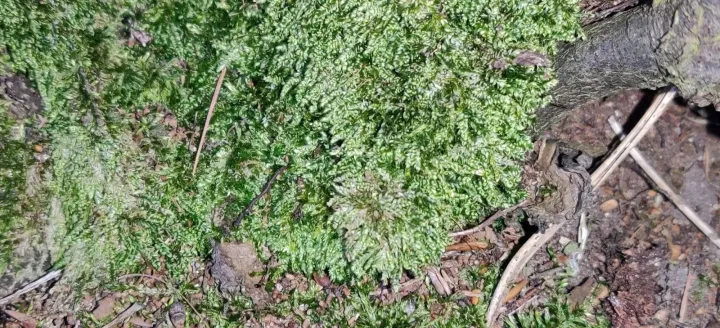
Botanical characteristics include curved leaves that form glossy, vibrant green mats. This structural adaptation allows the moss to effectively trap dew and moisture, which is vital for its photosynthesis process in the low-light conditions of the forest understory.
Regarding habitat requirements, the plant is strictly heliophobic, meaning it requires protection from direct sunlight to prevent desiccation. It thrives in high-humidity environments and is highly sensitive to the surrounding microclimate stability.
In conservation and potential cultivation contexts, providing a consistent substrate moisture level is paramount. Because it lacks a vascular system for deep water uptake, it relies entirely on the surface humidity and the presence of organic debris to sustain its colonies.
Main diseases and pests
Deforestation represents the most significant threat to the survival of Plagiothecium curvifolium populations. The removal of the forest canopy causes immediate changes in light intensity and temperature, leading to rapid evaporation and the subsequent death of moss mats.
Air quality is critical for this species. As a bryophyte, it lacks a protective cuticle, making it highly susceptible to pollutants like sulfur dioxide. Accumulation of heavy metals or industrial gases directly impairs its cellular functions and reproductive capacity.
Changes in local hydrology, specifically the drying of forest streams or lowering of groundwater tables, prevent the moss from acquiring necessary moisture. This leads to a decline in biodiversity within the affected forest patches and leaves the soil vulnerable to erosion.
Mechanical disturbance, such as human foot traffic or heavy machinery in forested areas, physically destroys the fragile moss colonies. Once a colony is fragmented or compressed, it is often unable to regenerate in the degraded soil environment.
Competition from invasive plant species or opportunistic weeds that spread rapidly in disturbed areas can choke out Plagiothecium curvifolium. Once the micro-niche is overtaken, the moss loses its ability to secure its rhizoids and eventually vanishes from the habitat.