
Plagiothecium denticulatum
Plagiothecium denticulatum
Description
Growing requirements
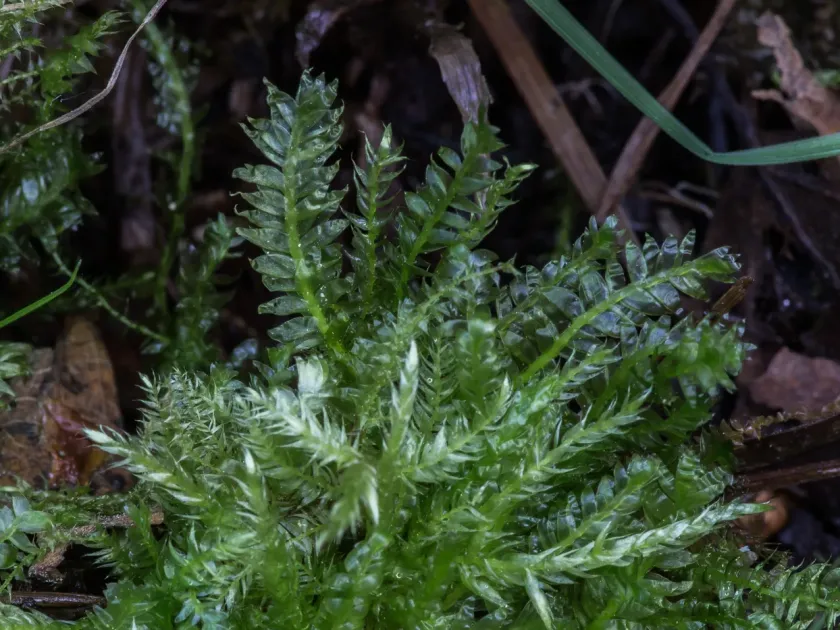
Plagiothecium denticulatum, commonly known as the denticulate silk-moss, belongs to the Plagiotheciaceae family. It is a perennial pleurocarpous moss that forms loose to dense mats, displaying a distinctive glossy appearance characteristic of this genus.
The species is widespread throughout the temperate regions of the Northern Hemisphere. It primarily colonizes moist, shaded habitats, frequently occurring on humus-rich forest floors, decaying logs, tree bases, and sometimes in rock crevices or along damp banks.
This moss thrives in environments with high ambient humidity and stable moisture levels. It is highly adapted to low-light conditions, making it an excellent candidate for the understory layer of temperate forests where it competes effectively for nutrients in the leaf litter zone.
Botanically, the plant is identified by its flattened, complanate leaves that exhibit fine serrations at the apex. The stems can be prostrate or ascending, often presenting a pale green to yellowish-green color that becomes more vibrant under optimal water saturation.
In practice, it is valued in horticulture for creating naturalistic ground covers in woodland-themed gardens or for specialized terrarium setups that require authentic forest floor vegetation.
Main diseases and pests
The primary threat to the stability of Plagiothecium denticulatum populations is habitat fragmentation and the alteration of forest microclimates, which often leads to decreased humidity levels essential for the moss’s survival.
As a bryophyte, it is highly sensitive to atmospheric pollution. High levels of sulfur dioxide and heavy metals can inhibit growth and lead to the degradation of chlorophyll, making it a bioindicator of local air quality.
In cultivation or natural settings, over-compaction of the soil surface by human traffic can destroy the moss mats, preventing the necessary gas exchange and water uptake required by the gametophyte stage.
Herbivory by slugs and snails presents a biological threat, especially in nurseries or greenhouses where high humidity levels attract these pests, necessitating non-chemical control methods to protect the delicate stems.
Proper management involves maintaining consistent moisture levels while ensuring adequate ventilation, which helps prevent pathogenic fungal outbreaks that can occur if the moss mat remains waterlogged for extended periods.