
Pineapple sage
Salvia elegans Vahl
Description
Sowing dates
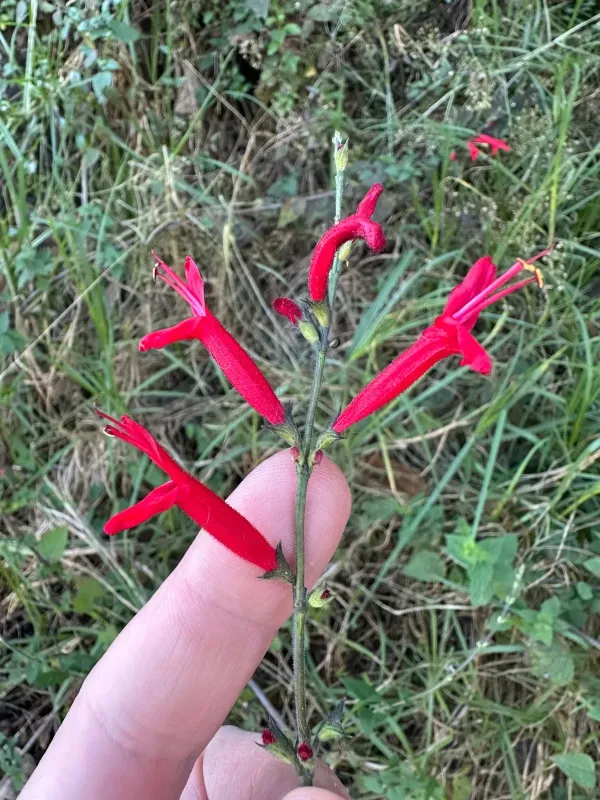
Pineapple sage (Salvia elegans) is a tender perennial belonging to the Lamiaceae family, widely appreciated for its fruit-scented foliage and vibrant red flowers.
In regions with frost, it is typically grown as an annual, with seeds started indoors in late winter to ensure a long growing season for the plant.
The seeds require light to germinate, so they should be barely covered with soil and kept in a warm environment with temperatures around 20 degrees Celsius.
Once the danger of frost has passed, the seedlings should be hardened off before being transplanted into the garden or larger pots.
It is also easily propagated through stem cuttings, which can be rooted in water or moist potting mix throughout the spring and early summer months.
Growing requirements
This plant thrives in full sun but can tolerate partial shade, especially in hotter climates where the foliage might scorch under intense heat.
The soil should be rich in organic matter, well-draining, and kept consistently moist to support the rapid growth of the lush green foliage.
Regular watering is essential, especially for container-grown plants which tend to dry out much faster than those planted directly in the ground.
While the plant is not a heavy feeder, a balanced liquid fertilizer applied every few weeks during the summer will encourage more robust growth and blooms.
Good air circulation is vital to prevent fungal issues, so ensure that the plants are spaced out sufficiently in the garden beds.
Main diseases and pests
The most common pests include aphids and spider mites, which are particularly prevalent if the plant is grown in dry indoor conditions during winter.
Overwatering or poorly draining soil will quickly lead to root rot, causing the plant to wilt even if the soil surface appears to be moist.
Powdery mildew can become an issue in stagnant air, appearing as a white dusting on the leaves and eventually weakening the overall health of the plant.
Integrated pest management should focus on early detection and the use of natural predators or gentle insecticidal soaps to avoid toxic residues.
- Aphids
- Spider mites
- Root rot
- Powdery mildew
Harvesting
Harvesting the aromatic leaves is done by snipping off the tender new growth, which contains the highest concentration of essential oils.
The leaves are widely used in culinary applications, including flavoring iced teas, fruit salads, salsas, and various desserts that benefit from a tropical scent.
If you intend to dry the leaves for winter use, gather them before the plant blooms, as the energy is diverted toward flower production at that stage.
The bright red tubular flowers are also edible and make a beautiful, tangy garnish for cocktails and professional culinary presentations.
Before the first frost, you may choose to bring the plants indoors to a sunny window, where they can continue to grow as a fragrant indoor herb.